
Handheld Laser Welding in Metal Fabrication
Discover the most common applications of handheld laser welding in modern metal fabrication. Explore innovative laser welding applications that enhance efficiency and precision in welding solutions.
4/2/20264 min read

Introduction to Handheld Laser Welding
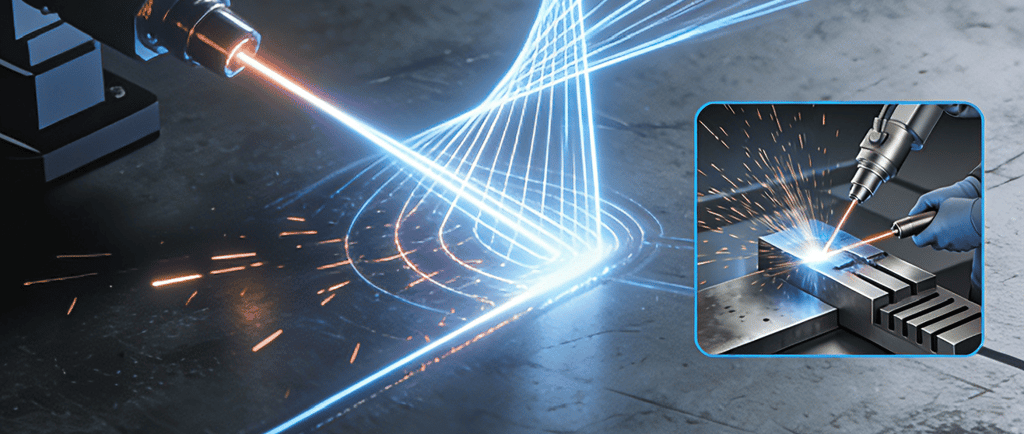
Handheld laser welding is an innovative technology that has significantly transformed the metal fabrication industry. The basic principle behind this method involves the use of focused laser beams to melt and join metal pieces. This process offers a high degree of precision, making it distinct from traditional welding techniques, which often rely on heat generated from electric arcs or gas flames. Unlike these conventional methods, which can lead to increased distortion and heat-affected zones, handheld laser welding enables tighter control over thermal input, thereby mitigating such risks.
The advantages of handheld laser welding extend beyond mere precision. One notable benefit is its speed; this technology allows for faster welding operations, which can enhance productivity across various manufacturing environments. Additionally, it is highly versatile, accommodating a wide range of materials including stainless steel, aluminum, and copper, making it suitable for numerous applications, from automotive to aerospace industries.
Furthermore, the portability of handheld laser welding systems enhances their utility, enabling operators to perform welding tasks in hard-to-reach areas without the need for heavy equipment. This flexibility is particularly valuable in fieldwork scenarios where space and mobility are limited. As industries continue to evolve, the demand for efficient and adaptable joining methods grows, positioning handheld laser welding as an increasingly popular alternative.
Overall, the integration of handheld laser welding into metal fabrication represents a significant shift towards more efficient and precise welding solutions. By embracing this technology, manufacturers can benefit from improved weld quality, reduced operational costs, and enhanced overall efficiency. The future of metal joining is undoubtedly being reshaped by the continued adoption of handheld laser welding technology.
Application in Automotive Industry
The automotive industry has seen significant advancements with the adoption of handheld laser welding technology. This technique offers several advantages for parts assembly, addressing the demand for efficiency and precision in manufacturing processes. By utilizing handheld laser welding, automotive manufacturers can achieve high-quality welds that are both strong and aesthetically pleasing. The ability to manipulate the laser in hard-to-reach areas ensures that even complex assemblies are perfected without compromising structural integrity.
One of the primary uses of handheld laser welding in the automotive sector is for assembling lightweight structures. As modern vehicles increasingly emphasize fuel efficiency and reduced emissions, manufacturers are increasingly turning to lighter materials, such as aluminum and high-strength steel. Handheld laser welding is particularly beneficial in welding these materials, as it generates minimal heat, reducing the risk of warping and distortion. This characteristic allows for more precise control over the welding process, ultimately leading to enhanced performance and durability in automotive components.
In terms of production efficiency, handheld laser welding technology has been shown to significantly reduce cycle times. The rapid speed of the welding process allows multiple components to be assembled quickly, maximizing line productivity. For instance, a prominent case study involving an automotive manufacturer demonstrated a reduction in assembly time by up to 30% after integrating handheld laser welding into their operations. This improvement not only streamlined workflows but also contributed to higher output rates, ultimately boosting the company's bottom line.
Furthermore, this technology supports the ongoing transition towards automation within the automotive sector. As manufacturers adopt more automated solutions, handheld laser welding serves as a flexible option that can adapt to both manual and automatic processes. Hence, there is a clear trend in which handheld laser welding is transforming the automotive industry, leading to enhanced structural integrity, improved efficiencies, and the ability to meet evolving market demands.
Benefits in Aerospace Manufacturing
Handheld laser welding technology has emerged as a critical tool in the aerospace manufacturing sector, offering numerous advantages that directly contribute to the efficiency and performance of aircraft components. One of the primary benefits of this technique is its ability to effectively join dissimilar materials, such as titanium and aluminum, which are often utilized in aerospace applications due to their unique properties. This capability not only enhances the strength of the joints but also enables the use of advanced materials that can significantly improve the overall performance of the aircraft.
Moreover, precision is paramount in aerospace manufacturing. Handheld laser welding provides an unparalleled level of accuracy that is crucial for adhering to stringent weight specifications in aircraft design. Excess weight in aerospace components can lead to inefficiencies in fuel consumption and overall performance; consequently, ensuring each joint is made with precision helps maintain optimal weight and structural integrity. The focused energy of the laser allows for minimal heat input, reducing the risk of thermal distortion and maintaining the physical characteristics of the materials involved.
Specific applications of handheld laser welding in the aerospace field include the assembly of aircraft frames, fuel tanks, and engine components. For instance, in the manufacturing of fuel tanks, the ability to create strong and lightweight joints is essential for ensuring the safety and efficiency of the aircraft's operation. Additionally, as the industry moves towards using more composite materials, handheld laser welding remains at the forefront, adapting to new challenges and continuing to push the boundaries of what is possible in aerospace manufacturing.
Future Trends and Conclusion
As the metal fabrication industry evolves, handheld laser welding technology is poised for significant advancements that will reshape its applications and capabilities. Emerging trends indicate a steady improvement in the equipment utilized for handheld laser welding, characterized by increased portability, higher power output, and enhanced precision. Manufacturers are investing in research to develop lighter and more compact units without compromising on performance, thereby expanding their usability in diverse environments.
In parallel, software advancements are playing a critical role in the evolution of handheld laser welding systems. Improved software platforms will enable greater automation and real-time monitoring of the welding process. Enhanced user interfaces will facilitate easier operation, allowing even those with minimal experience to achieve high-quality welds with laser technology. Furthermore, integration with artificial intelligence and machine learning algorithms is expected to optimize welding parameters dynamically, resulting in improved efficiency and accuracy.
Potential new applications for handheld laser welding technology are also on the horizon. Industries such as automotive, aerospace, and electronics are likely to adopt these systems for intricate tasks that require fine detail and durability. The ability to weld delicate components with minimal heat distortion offers significant advantages, particularly in sectors that demand precision fabrication. Additionally, the trend toward sustainable practices and reduced waste in fabrication processes may drive further adoption of handheld laser welding solutions, as these systems generally produce cleaner welds compared to traditional methods.
In conclusion, the future of handheld laser welding in metal fabrication appears bright, driven by technological advancements and a growing understanding of its benefits. The adoption of handheld laser welding is associated with greater productivity, improved quality, and versatility across various industries. Embracing these innovations will be pivotal for manufacturers looking to remain competitive in an increasingly dynamic market.