How Handheld Laser Welding Machines Work
Discover the principles behind handheld laser welding machines and how they revolutionize metal fabrication. Learn about the fiber laser welding process and why it's gaining popularity in various industries.
4/7/20266 min read
Understanding Laser Welding Technology
For many buyers who are new to laser equipment, one of the first questions is simple: how does a handheld laser welding machine actually work? While the concept may sound technical, the basic principle is not difficult to understand, especially when compared to traditional welding methods.
Laser welding technology is a sophisticated manufacturing process wherein concentrated light beams, or lasers, are utilized to melt and join materials, typically metals. This method is favored for its remarkable precision and speed, offering solutions that accommodate a variety of welding needs. The essential mechanism involves directing a high-energy laser beam onto the material's surface, producing a localized heat source that effectively melts the material and fuses multiple components together.
At its core, a handheld laser welding machine uses a fiber laser source to generate a concentrated beam of energy. This beam is transmitted through an optical fiber and focused onto a very small نقط on the metal surface. When the energy density is high enough, the metal melts almost instantly, allowing two pieces to fuse together as the material cools.
The significance of laser wavelengths cannot be overstated. Different wavelengths correspond to different absorption characteristics of various materials. For instance, metals generally absorb particular laser wavelengths more efficiently than others. This is critical because optimal absorption leads to effective melting of the material, resulting in strong welds. Additionally, the choice of focusing methods, such as lens focal lengths and spot sizes, directly influences the heat concentration and the energy delivered to the workpiece, ultimately affecting the quality of the weld.
Another crucial element in the welding process is heat management. The heat generated by the laser is responsible for melting the material at the joint interface. However, excess heat can lead to warping or other defects, thus careful control of the laser's power and duration is vital. The exercise of maintaining an ideal heat input can minimize thermal distortion, allowing for tighter tolerances and improved structural integrity in the finished product. Given these components, laser welding stands out in modern manufacturing—not only because of its speed but also due to the high-quality output it consistently produces.
The Handheld Laser Welding Principle
What makes this process different from MIG or TIG welding is the way heat is applied. Traditional welding methods rely on an electric arc, which spreads heat over a larger area. This often leads to a wider heat-affected zone, more deformation, and the need for additional finishing work. Laser welding, by contrast, delivers energy in a much more focused manner. The result is a narrow weld seam with minimal thermal impact.
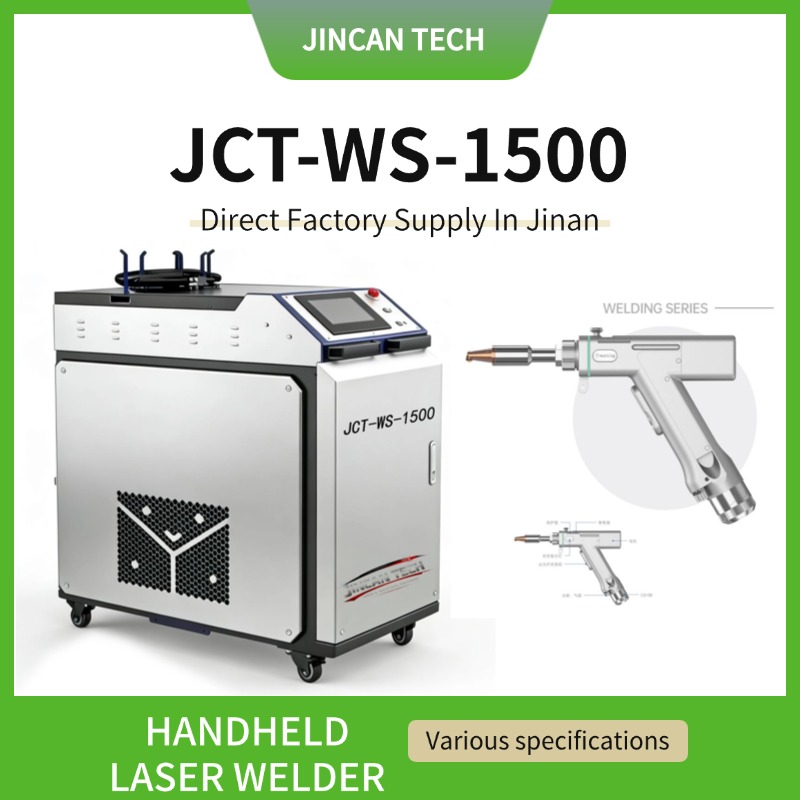
A typical handheld laser welding system consists of several main components: the laser source, a cooling system (usually water-based), a control unit, and a handheld welding gun. The operator holds the welding head and guides it along the joint, similar to using a traditional welding torch. However, the learning curve is often shorter because the system is more stable and requires less manual adjustment.
Handheld laser welding machines represent a significant advancement in the field of welding technology, designed specifically for portability and versatility without compromising performance. At the core of these machines is the fiber laser, which utilizes optical fibers doped with rare elements to generate a highly focused beam of light. This focused beam is essential in achieving the required precision for various welding applications.
The operation of a handheld laser welder begins with the generation of the laser beam, which is then delivered through the fiber optic cable. The fiber optic technology allows for efficient transmission of the laser light, resulting in a concentrated spot that can reach extremely high temperatures, ideal for melting metals. This concentrated energy not only facilitates effective welding but also minimizes material distortion, a significant advantage when working with sensitive components.
One of the critical aspects of handheld laser welding is the mechanics of focusing the laser beam onto the workpiece. Advanced optics systems are employed within the welding torch that allows the operator to adjust the focal distance and spot size, ensuring optimal results for different materials and thicknesses. The portability of these machines means that users can easily maneuver around the workspace, making it suitable for a variety of applications, from automotive repairs to delicate electronic assemblies.
Typical applications of handheld laser welding machines include the joining of thin-walled components, fabrication of medical devices, and custom metal artwork. The combination of ease of use and high precision makes handheld laser welding an attractive option for both industrial and small-scale projects. Therefore, understanding the principle behind these machines is crucial for potential buyers looking to invest in innovative welding solutions.
The Fiber Laser Welding Process
One important feature of modern laser welding machines is parameter control. Users can adjust power, speed, and welding modes depending on the material and thickness. For example, thin stainless steel sheets require lower power and faster movement, while thicker materials need higher energy input. Once the correct settings are established, they can be saved and reused, which improves consistency in production.
Shielding gas is also commonly used in laser welding, just like in MIG or TIG processes. It helps protect the weld area from oxidation and ensures a cleaner finish. The difference is that laser welding typically requires less gas and produces fewer sparks and spatter.
The fiber laser welding process is an advanced method that employs high-intensity laser beams produced by fiber optics to join materials. This technique is known for its precision and efficiency, making it a preferred choice in various industries including automotive, aerospace, and manufacturing. The process begins with preparation, where the surfaces of the materials to be joined are meticulously cleaned and positioned in alignment to ensure optimal weld quality.
Once preparation is complete, the operator selects the appropriate settings on the handheld laser welding machine. Fiber lasers generate a concentrated beam of light, which is directed to the material interface. The laser beam penetrates the surfaces of the materials, inducing localized melting. This melting occurs rapidly, allowing the materials to fuse together without requiring excessive heat input, which is particularly useful for heat-sensitive components.
The versatility of fiber laser welding allows for a wide range of materials to be welded, including metals like steel, aluminum, and titanium. The capability to weld dissimilar materials is another advantage of this process. It is common for the machine settings to be adjusted based on the specific properties of the materials involved, facilitating efficient and high-quality welds.
Post-weld requirements often include inspections to evaluate the integrity of the welds, which may involve non-destructive testing techniques. This ensures that the welding process has been successful and meets the requisite standards of strength and durability. The fiber laser welding process, characterized by its speed and precision, offers significant benefits in productivity and quality assurance, making it an essential technology for modern welding applications.
Benefits and Considerations for Buyers
Another aspect worth noting is safety. Because laser beams are highly concentrated, proper protective measures are necessary. Operators should use protective eyewear and follow standard safety procedures. Most machines are equipped with safety features such as emergency stops and protective enclosures.
In practical terms, the advantages of this working principle become clear on the production floor. The focused energy allows for faster welding speeds, especially on thin to medium materials. The reduced heat input minimizes distortion, which is particularly important for precision parts. In many cases, the weld seam is clean enough that no grinding or polishing is required afterward.
A handheld laser welding machine provides numerous advantages that make it an attractive option for various industries. One of the primary benefits is its efficiency. The precision of laser welding allows for faster processing times compared to traditional welding methods, thereby enhancing productivity. Additionally, the heat-affected zone is minimized, which reduces the potential for warping and ensures a high-quality finish in metal pieces.
Versatility is another significant benefit of handheld laser welding machines. They can be used on a wide array of materials, including steel, aluminum, and various alloys, making them suitable for different applications. This flexibility makes them an indispensable tool for workshops and manufacturers looking to handle diverse welding tasks.
Cost-effectiveness is also noteworthy. Although initial investment may seem high, the long-term savings can be considerable due to reduced material wastage and lower energy consumption. Furthermore, maintenance costs tend to be lower for laser machines, given their durability and reliability over time.
However, prospective buyers should consider several important factors before making a purchase. Safety is paramount when operating a handheld laser welding machine. Proper protective gear should be utilized, including safety glasses and gloves, to prevent any accidents from the intense light and heat generated during the welding process. Additionally, buyers must be aware of the necessary training for operators to effectively handle the technology, as improper use can lead to both safety hazards and equipment damage.
Maintenance is another crucial consideration. Regular checks and servicing are essential to keep the equipment in optimal working condition. This includes monitoring the laser source, cooling system, and overall machine functionality, which will ensure longevity and efficiency. By weighing these benefits and considerations, buyers can make informed decisions about investing in handheld laser welding equipment.
Another aspect worth noting is safety. Because laser beams are highly concentrated, proper protective measures are necessary. Operators should use protective eyewear and follow standard safety procedures. Most machines are equipped with safety features such as emergency stops and protective enclosures.
In practical terms, the advantages of this working principle become clear on the production floor. The focused energy allows for faster welding speeds, especially on thin to medium materials. The reduced heat input minimizes distortion, which is particularly important for precision parts. In many cases, the weld seam is clean enough that no grinding or polishing is required afterward.