Top Laser Welding Distributor & Business Opportunities
Explore lucrative laser welding business opportunities with our trusted laser welding distributor. Sell high-quality laser welding machines and join our network of premier welding equipment distributors.
4/24/20266 min read
The Rise of Laser Welding Technology
Laser welding technology has undergone significant advancements since its inception. Initially developed in the late 20th century, it has evolved from a niche application into a mainstream method employed across diverse sectors. The early adoption of laser welding was primarily observed in industries requiring high precision, such as electronics and aerospace. However, as technological capabilities have expanded and become more affordable, its application range has broadened considerably.
Key advancements in laser technology have played a crucial role in its rise. The introduction of fiber lasers and improved beam quality has resulted in enhanced efficiency and speed, making laser welding an attractive alternative to traditional welding methods. Unlike conventional welding techniques that may introduce thermal distortion or require extensive post-processing, laser welding offers reduced heat input, leading to minimal material warping and superior joint quality. This precision is particularly appealing to manufacturers that prioritize quality and efficiency.
Furthermore, the integration of automation in manufacturing processes has catalyzed the growth of laser welding. As companies strive to boost productivity and maintain competitive advantages, automated laser welding systems provide consistent and repeatable results. This automation also aligns well with the broader shift towards Industry 4.0, where smart manufacturing processes emphasize data-driven decision-making and real-time monitoring. The ability to seamlessly integrate laser welding into automated assembly lines not only enhances production rates but also significantly reduces labor costs.
The increasing adoption of laser welding technology across various sectors, including automotive, medical devices, and energy, underscores its status as a preferred method for welding applications. As manufacturers continue to seek innovative solutions that improve productivity and product quality, the prominence of laser welding technology is expected to rise further.
Benefits of Laser Welding for Distributors
Laser welding machines present a multitude of benefits that can significantly enhance the product line of distributors. One of the primary advantages is the improved welding speed offered by these machines. The high-energy density of laser beams allows for rapid melting and fusion of materials, resulting in faster processing times. This efficiency not only increases throughput but also enables distributors to respond more swiftly to customer demands.
In addition to speed, laser welding machines provide enhanced precision compared to traditional welding methods. The focused laser beam minimizes heat-affected zones, reducing the chances of warping or distortion in the materials being welded. This precision is particularly beneficial in industries requiring high tolerance levels, allowing distributors to serve a diverse range of clients with varying specifications.
Another noteworthy advantage is the reduction in operational costs associated with laser welding. The energy efficiency of these machines means they consume less power compared to traditional welding processes, which can lead to significant cost savings over time. Moreover, the lower maintenance requirements of laser systems further contribute to reduced operational expenses, making them a financially attractive option for distributors.
Laser welding is versatile, capable of working with a wide array of materials from metals to plastics. This adaptability allows distributors to cater to different sectors, including automotive, aerospace, and fabrication industries, thus broadening their market scope. The ability to handle various materials can help increase sales opportunities and customer satisfaction, ultimately boosting distributor profitability.
By integrating laser welding machines into their product offerings, distributors can leverage these benefits to enhance their overall service quality and maintain a competitive edge in the market.
Market Trends and Consumer Demands
In today’s rapidly evolving industrial landscape, the demand for high-quality, efficient welding solutions is paramount. As manufacturing processes become more complex and competitive, distributors are increasingly recognizing the necessity to integrate advanced technologies such as laser welding machines into their product lines. The ability of laser welding to provide precision and speed is attractive to industries seeking to enhance productivity while maintaining high standards of quality.
Consumer demands are significantly influencing market trends, with a clear preference emerging for welding techniques that minimize waste and maximize efficiency. For instance, the capacity of laser welding machines to produce less heat-affected zones allows for better material integrity, which directly addresses the concerns of many industries regarding durability and reliability. Furthermore, the growing emphasis on sustainability has propelled manufacturers to seek solutions that align with environmentally responsible practices. Laser welding is particularly appealing in this regard, as it often results in lower energy consumption compared to traditional welding methods, thereby helping companies meet their sustainability goals.
The competitive nature of the manufacturing industry compels businesses to adopt innovations not only to enhance their operational efficiency but also to comply with regulatory standards. Distributors are thus keen on offering laser welding machines as a part of their portfolio to cater to this market demand. As industries become more focused on technological advancement and compliance requirements, the trend towards incorporating laser welding solutions will likely continue to grow. Consequently, this shift presents a lucrative opportunity for distributors looking to stay ahead in a challenging economic landscape by meeting the evolving expectations of their customers.
The Future of Laser Welding in Distribution
In recent years, more and more distributors have started to include laser welding machines in their product portfolios. This is not just a trend driven by technology, but a response to real changes in market demand.
Traditionally, distributors in the metalworking and equipment industry focused on tools such as MIG and TIG welders. These products are still relevant, but the market is becoming more competitive, and profit margins are gradually shrinking. At the same time, customers are looking for solutions that can improve efficiency and reduce labor costs. This is where laser welding machines begin to stand out.
As the distribution sector continues to evolve, laser welding technology is poised to play a pivotal role in enhancing operational efficiency and product quality. The adoption of laser welding machines by distributors signifies a commitment to embracing innovation and improving manufacturing processes. This technology presents numerous advantages, including increased precision, reduced thermal distortion, and greater speed, all of which can lead to improved product consistency and customer satisfaction.
One of the main reasons distributors are turning to laser welding equipment is product differentiation. In a crowded market, offering something new and innovative helps attract attention. Laser welding is still considered a relatively advanced technology in many regions, which makes it easier to position as a premium product.
Another important factor is margin potential. Compared to traditional welding machines, laser welders often have higher perceived value. Customers are willing to pay more for equipment that promises better performance and long-term savings. This creates more room for distributors to achieve better profit margins.
Distributors who incorporate laser welding into their product lines are likely to gain a competitive edge in the market. By leveraging this technology, they can streamline production efforts, minimize waste, and decrease response times to customer demands. Moreover, as industries increasingly prioritize sustainability, laser welding machines contribute to less energy consumption and material usage, aligning with eco-friendly practices in manufacturing.
Ease of demonstration is also an advantage. Laser welding machines are visually impressive. When customers see the speed and clean weld seams, the value becomes easy to understand. This makes sales conversations more effective, especially in face-to-face or video demonstrations.
From a customer perspective, the demand is clearly growing. Manufacturers are under pressure to improve efficiency, reduce labor dependency, and maintain consistent quality. Laser welding addresses all these concerns. As awareness increases, more buyers actively search for this type of equipment.
The future trends in laser welding are closely linked to the integration of Industry 4.0, which emphasizes smart manufacturing practices. This paradigm shift will enable distributors to utilize data analytics, automation, and connected systems that enhance the functionality of laser welding machines. As this technology advances, it is anticipated that laser welding will become more accessible and versatile, allowing for applications across a broader range of materials and industries.
However, entering this market also requires some preparation. Distributors need to understand the basic technology, typical applications, and common customer questions. Providing simple training and after-sales support can make a big difference in building trust.
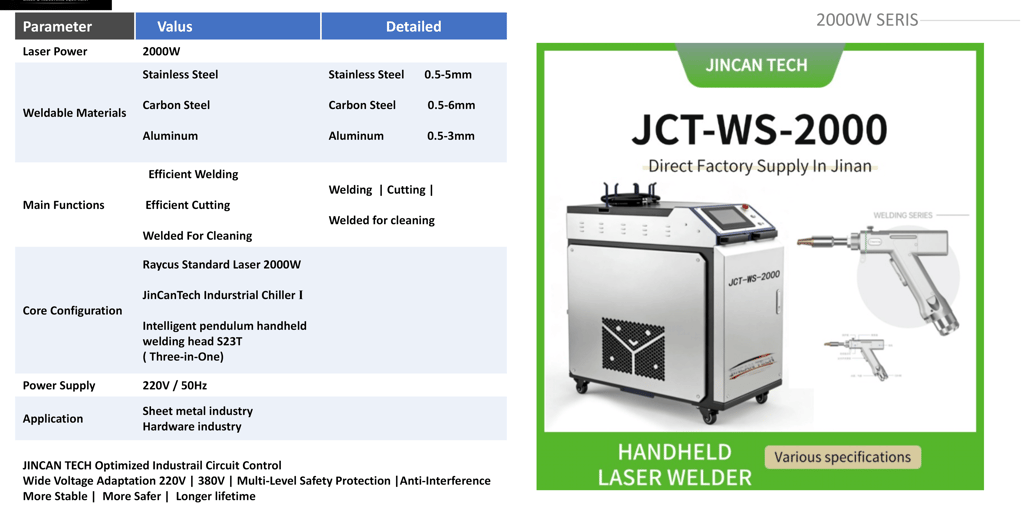
Another point to consider is product positioning. Not all customers need the same configuration. Offering multiple options, such as different power levels or cooling systems, allows distributors to target a wider audience.
In addition, building a clear value proposition is important. Instead of focusing only on specifications, it is more effective to explain how the machine helps customers save time, reduce cost, and improve quality.
In conclusion, for distributors looking to thrive in an increasingly competitive landscape, embracing laser welding technology is not merely an option; it is a strategic imperative. Staying informed about technological advancements, including the potential benefits of smart integration, will ensure that distributors remain at the forefront of innovation and continue to meet the evolving needs of their clientele. As we look toward the future, it is clear that laser welding will be an essential component of efficient, high-quality manufacturing in the distribution industry.
In conclusion, the growing interest in laser welding machines is not accidental. It reflects a shift in the industry toward higher efficiency and smarter manufacturing. For distributors, adding laser welding equipment is not just about expanding the product line—it is about staying relevant in a changing market.