
Laser Welding for "laser welding kitchen equipment
Discover the benefits of laser welding in the production of stainless steel kitchen equipment. Explore food-grade welding methods and effective stainless steel welding solutions laser welding kitchen equipment for high-quality results.
4/6/20265 min read
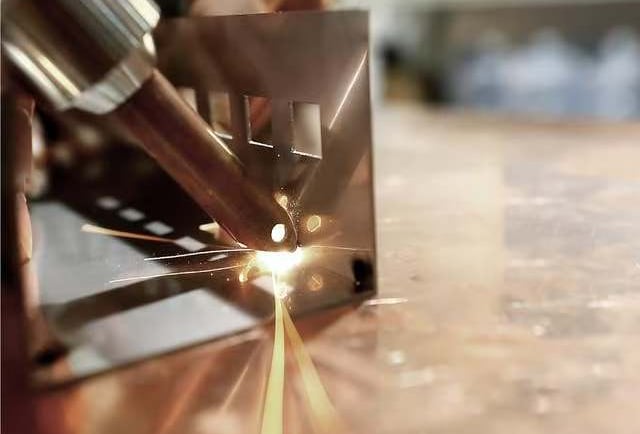
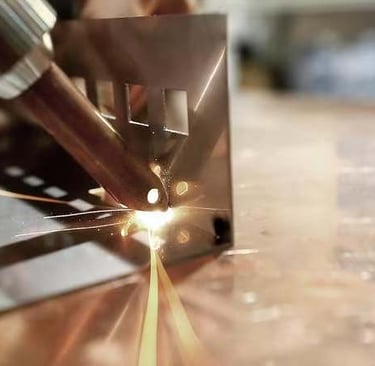
Understanding Laser Welding Technology
Kitchen equipment manufacturing places high demands on welding quality. Products such as sinks, cabinets, and food processing equipment are often made from stainless steel, where both appearance and hygiene are critical.
Traditional welding methods, including TIG and MIG, are still widely used in this industry. However, they often require additional grinding and polishing to achieve a clean finish. This not only increases labor costs but also introduces variability in the final product.
In laser welding, different types of lasers can be employed. The most prevalent are fiber lasers and CO2 lasers, both of which are distinguished by their operating wavelengths and the materials they can effectively weld. Fiber lasers are renowned for their efficiency and are increasingly favored in applications that demand high-speed welding with minimal distortion. Conversely, CO2 lasers are versatile and capable of welding various materials, including thick and non-metallic substrates. The choice of laser depends on the specific requirements of the welding application.
The key advantage of laser welding technology lies in its ability to provide medical-grade precision, which is crucial in the manufacturing of kitchen equipment. Unlike traditional welding methods, which often involve higher heat inputs and can result in warping or varying joint quality, laser welding operates at much lower temperatures. This minimizes thermal stress and ensures higher quality, making it particularly advantageous for creating components where durability and hygiene are paramount.
Furthermore, laser welding facilitates automation and integration into production lines, enhancing manufacturing efficiency and consistency. As such, manufacturers in the kitchen equipment sector are increasingly adopting laser welding to ensure that their products meet stringent quality standards while often reducing production costs.
Benefits of Laser Welding for Kitchen Equipment
Laser welding offers a more streamlined approach. The process produces narrow, clean weld seams with minimal discoloration. In many cases, no post-processing is required, which significantly reduces production time.
For manufacturers producing high-end kitchen equipment, this consistency is important. Customers expect smooth surfaces and uniform finishes, especially in visible areas. Laser welding helps meet these expectations more reliably.
Another advantage is heat control. Stainless steel is sensitive to heat input, and excessive heat can lead to deformation or discoloration. Laser welding minimizes the heat-affected zone, preserving material properties.
Laser welding offers numerous advantages when it comes to the manufacturing of kitchen equipment, especially for components made from stainless steel. One of the primary benefits is the precision it delivers. Laser technology allows for finely controlled energy input, meaning that welds can be executed with an accuracy that is often unattainable through traditional welding methods. This precision minimizes the heat-affected zone, ensuring that the integrity of the surrounding material is preserved. As a result, kitchen equipment not only maintains its structural strength but also exhibits a polished finished appearance, which is crucial for aesthetic considerations in commercial and residential kitchens.
Moreover, the speed of laser welding is a significant advantage in a manufacturing environment. The rapid processes enable manufacturers to increase production rates without compromising on quality. This efficiency can lead to shorter lead times in the delivery of kitchen equipment, thus enhancing customer satisfaction while effectively managing production schedules.
In addition to precision and speed, the quality of welds achieved through laser welding is typically superior. The process generates minimal spatter and requires less post-welding cleaning and finishing, which reduces labor costs and time. Additionally, laser welding contributes to energy efficiency and waste reduction. Compared to conventional methods, laser welding consumes less energy as it allows for tighter focusing of the laser beam, leading to reduced operational costs. Furthermore, by minimizing material waste through precise welds, manufacturers are able to adopt more sustainable practices, aligning with growing industry demands for environmentally friendly solutions in kitchen equipment manufacturing.
Food Grade Welding Method and Its Importance
In the context of kitchen equipment manufacturing, food grade welding is an essential process that ensures the integrity and safety of products intended for food preparation and handling. This method employs advanced techniques to create welds that not only meet aesthetic standards but also adhere to stringent hygiene requirements. For manufacturers in the food industry, implementing food grade welding is crucial in safeguarding public health. It minimizes the risk of contamination, which is paramount in environments where food is produced and served.
One of the core advantages of laser welding as a food grade welding method is its ability to produce clean and precise welds. This precision reduces the likelihood of crevices or gaps where bacteria can accumulate, thereby ensuring a smoother surface that is easier to clean. Furthermore, the high-temperature focused beam of laser welding results in minimal heat-affected zones, preserving the properties of the base materials, which can also be critical for sustained performance in demanding food handling environments.
Manufacturers must comply with various regulations concerning food safety standards, such as those outlined by the FDA in the United States and similar organizations globally. These regulations emphasize the importance of using materials and processes that do not compromise consumer safety. Laser welding meets these requirements by enabling the use of food-safe materials and ensuring that the manufacturing process is free from contaminants. Given the increasing consumer awareness regarding food safety, adopting a food grade welding method can serve as a competitive advantage for manufacturers, reinforcing their commitment to quality and safety.
Case Studies: Successful Applications in Kitchen Equipment
From a production standpoint, speed is also a factor. Laser welding can be faster than traditional methods, especially in repetitive tasks. This makes it suitable for both small workshops and large-scale production lines.
Hygiene is another consideration. In food-related applications, weld quality must meet strict standards. Smooth welds without pores or cracks reduce the risk of contamination and make cleaning easier.
Laser welding has emerged as a transformative technology in kitchen equipment manufacturing, with several companies successfully adopting this advanced welding method. One notable example is Company A, which specializes in the production of stainless steel appliances. Faced with the challenge of achieving precise welds without compromising material integrity, they turned to laser welding. By implementing this technology, Company A experienced significant improvements in production efficiency. The precision of laser welds allowed for higher throughput, reducing manufacturing time by approximately 30%. Additionally, the aesthetic quality of their products improved, appealing to a broader customer base.
Another case is Company B, a manufacturer of commercial cooking equipment. Prior to incorporating laser welding, they struggled with inconsistent weld quality and the need for extensive post-weld finishing. The introduction of laser welding technology not only enhanced the consistency of welds but also minimized the need for secondary operations. This led to a decrease in labor costs and an increase in product reliability, ultimately boosting customer satisfaction. The company reported a significant reduction in returns linked to weld failures after switching to laser welding.
Furthermore, Company C focused on eco-friendly practices within their manufacturing process. They discovered that laser welding generates less thermal distortion compared to traditional methods, minimizing material waste and energy consumption. By aligning their production with sustainability goals, Company C successfully enhanced their market reputation while adhering to environmental standards. The integration of laser welding has resulted in a multifaceted impact on their production and product quality, illustrating the versatility of this modern welding technique.
These real-world examples underscore the effectiveness of laser welding technology in the kitchen equipment sector, demonstrating its ability to address common manufacturing challenges while enhancing efficiency and product quality.
While the initial investment in laser equipment is higher, many manufacturers find that the reduction in labor and finishing work offsets the cost over time.
In conclusion, laser welding aligns well with the requirements of kitchen equipment manufacturing. It offers a balance of quality, efficiency, and consistency that is difficult to achieve with traditional methods alone.