Portable Laser Cleaning Machine | Industrial Laser Cleaner
Explore our comprehensive comparison of portable laser cleaning machines and industrial laser cleaners. Discover the best laser cleaning equipment for your needs portable laser cleaning machine and improve efficiency in your operations.
4/17/20265 min read
Understanding Laser Cleaning Technology
Laser cleaning machines can generally be divided into two categories: portable systems and industrial systems. While both serve the same basic purpose, their design and application are quite different.
Laser cleaning technology is an advanced method employed across various industries to remove contaminants, rust, and other unwanted materials from surfaces. Unlike traditional cleaning techniques that utilize solvents or abrasives, laser cleaning utilizes focused beams of light to achieve effective cleaning. At the core of this technology is the principle of laser ablation, where the energy from the laser is absorbed by the contaminants on a surface, causing them to vaporize or be ejected without damaging the underlying material.
The interaction between laser light and contaminants is vital to understanding how laser cleaning works. When a laser beam strikes a surface, the energy can create a localized rise in temperature. This rapid heating causes the contaminants consisting of paint, rust, or other debris to expand and either break loose or evaporate entirely. Because lasers can be precisely controlled, this process allows for the selective cleaning of various materials, ensuring that only the undesired layers are affected.
Different types of lasers are utilized in cleaning applications, each with specific attributes that affect their performance. For example, fiber lasers are highly efficient and often used for precise cleaning tasks on metals, while CO2 lasers tend to excel in removing organic materials from surfaces. Additionally, Nd:YAG lasers are effective for a variety of substrates and often used for industrial applications due to their versatility. Each type of laser has its strengths and weaknesses, making the choice crucial depending on the application and the material involved.
Overall, laser cleaning technology represents a significant evolution in surface preparation that emphasizes precision, efficiency, and environmental safety. Its ability to address a myriad of materials while minimizing damage makes it an attractive solution in modern cleaning applications.
Characteristics of Portable Laser Cleaning Machines
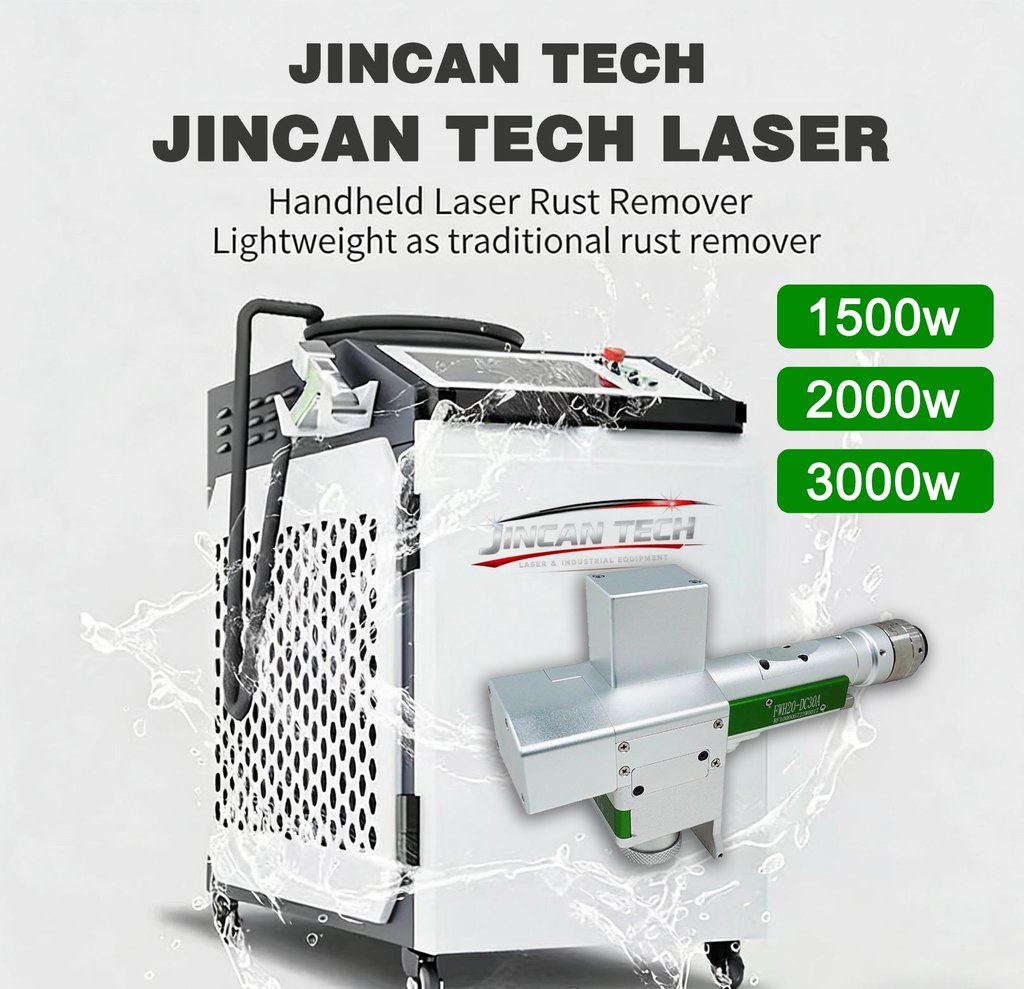
Portable laser cleaning machines are designed for flexibility. They are lightweight, easy to move, and suitable for on-site work. Industries such as maintenance, restoration, and construction often prefer portable systems because they allow operators to work directly at the job site.
Industrial laser cleaning machines, on the other hand, are designed for continuous operation. They usually have higher power and are integrated into production lines. These machines are more suitable for factories where cleaning is part of a larger manufacturing process.
Portable laser cleaning machines are engineered with a focus on flexibility and ease of use, making them particularly beneficial for on-site applications. One of the most outstanding features of these machines is their lightweight and compact design, which allows for effortless transportation and setup. This characteristic enables operators to conduct laser cleaning tasks in diverse locations, whether in industrial facilities, construction sites, or even remote areas, significantly enhancing operational convenience.
The mobility of portable laser cleaning units is further complemented by their user-friendly interfaces. Many models come equipped with intuitive controls and touchscreen displays, facilitating ease of operation even for users with minimal technical expertise. These machines are often designed to be maneuverable, allowing users to address rust removal, paint stripping, or surface cleaning tasks with precision and control.
Additionally, portable laser cleaning machines excel in applications where the removal of contaminants such as grease, dirt, and old coatings is required. They are commonly utilized in industries such as automotive, aerospace, and historical restoration, where careful attention to surface integrity is paramount. These machines are exceptionally efficient at cleaning intricate components and delicate surfaces without the risk of damaging the underlying materials.
Moreover, the environmental impact of portable laser cleaning technology is significantly lower compared to traditional methods. They produce minimal waste and eliminate the need for harmful chemicals, aligning with increasing global standards for sustainability. The use of laser cleaning not only meets high standards of performance but also advocates for environmentally responsible practices.
In essence, portable laser cleaning machines offer flexibility, efficiency, and ease of use, making them ideal for a wide range of cleaning applications across various industries. Their comprehensive design features contribute to a streamlined cleaning process, further enhancing productivity and ensuring optimal results.
Characteristics of Industrial Laser Cleaning Machines
Industrial laser cleaning machines are engineered to meet the demanding requirements of high-volume industrial applications. These advanced systems deliver a powerful performance that is essential for various sectors, including manufacturing, automotive, and aerospace. One of the defining characteristics of industrial laser cleaning machines is their high power output, typically ranging from several hundred watts to several kilowatts. This allows them to effectively remove heavy contaminants such as rust, paint, and grease, which often accumulate on surfaces.
Efficiency is a crucial aspect of these machines, as they are designed to operate continuously in industrial settings. Industrial laser cleaners offer rapid cleaning capabilities, significantly reducing downtime in production lines. For instance, a single operator can clean extensive surfaces much more quickly than traditional methods, thereby improving operational efficiency. Moreover, these laser cleaning systems can be seamlessly integrated into existing production lines, making them a flexible solution for manufacturers looking to enhance their cleaning processes.
Safety features are paramount in the design of industrial laser cleaning machines. They are equipped with advanced safety mechanisms to protect operators from potential hazards, such as laser exposure and the emission of harmful particles during the cleaning process. Oftentimes, these systems incorporate safety enclosures, protective goggles, and automated shutdown functions, ensuring workplace safety while maximizing functionality.
Additionally, industrial laser cleaning machines are capable of handling a variety of materials, including metals, plastics, and composites, making them suitable for diverse applications. Their versatility allows manufacturers to maintain equipment and surfaces without the risk of damage associated with aggressive traditional cleaning methods. Overall, industrial laser cleaning machines stand out for their combination of high power, efficiency, and safety, positioning them as a preferred choice for large-scale operations.
Comparisons and Practical Applications
When evaluating the differences between portable and industrial laser cleaning machines, performance is a paramount consideration. Industrial laser cleaners typically deliver higher power output, making them more effective for large-scale cleaning tasks that require the removal of significant contaminants or rust from extensive surfaces. For example, industries such as shipbuilding or heavy machinery manufacturing often prefer industrial machines due to their ability to handle intense workloads and larger areas efficiently. Conversely, portable laser cleaning machines provide flexibility and ease of use, being particularly favorable in situations where immediate access is necessary, such as in maintenance operations or fieldwork.
The cost of these machines also varies considerably, influencing buyer decisions. Portable laser cleaning systems are generally less expensive, making them accessible for smaller companies or specific projects that do not require heavy-duty capabilities. However, while the initial investment for portable models may be lower, potential buyers should consider long-term operating costs and maintenance requirements. Industrial systems, while more costly up front, often yield higher productivity and efficiency, justifying their price in environments where constant use is expected.
In terms of suitability for various tasks, potential buyers should assess the specific cleaning needs of their operations. If your work involves minor cleaning tasks on-site or in varied environments, a portable laser cleaning machine may suffice. However, for users engaged in extensive industrial tasks that require robust, consistent performance, an industrial laser cleaner would likely be the better fit. Ultimately, understanding the scope of applications, budget constraints, and performance requirements will guide potential buyers in making the most informed choice between portable and industrial laser cleaning machines.