1500W laser welder vs 2000W Laser Welder: Power Selection Guide
Discover the differences between 1500W 1500w laser welder and 2000W laser welders. Learn how to select the right laser welding power for your needs with our comprehensive handheld laser welder power guide and insights on industrial laser welding machines.
4/14/20266 min read
Understanding Laser Welding Power
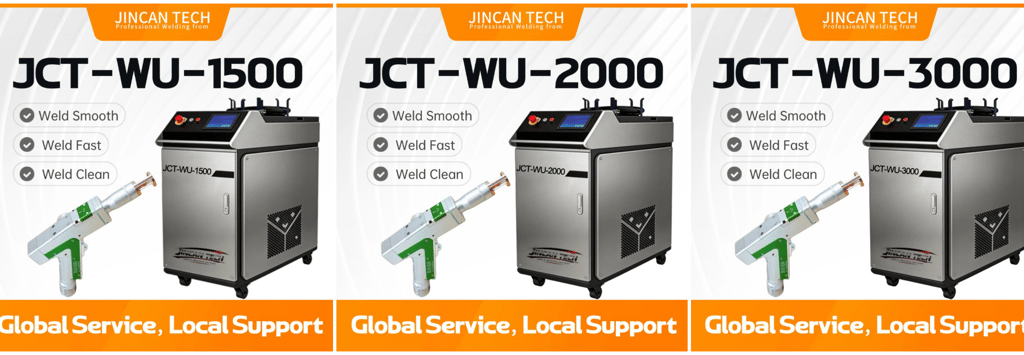
When buyers consider purchasing a handheld laser welding machine, one of the most confusing questions is choosing the right power level. The most common options in the market today are 1500W, 2000W, and 3000W. At first glance, it may seem that higher power is always better, but in reality, the right choice depends on your actual application.
Laser welding power is a critical aspect that determines the effectiveness and efficiency of the welding process. The power ratings, measured in watts (W), can significantly influence various factors during welding, such as penetration depth, welding speed, and the types of materials that can be welded effectively. A deeper understanding of these power ratings is essential for welders to select the appropriate equipment for their specific needs.
Lower wattages, such as 1500W, are typically suited for thinner materials or applications requiring less heat input. This power level allows for precise control during the welding process, reducing the risk of warping and distortion. However, when working with thicker materials, a 1500W laser may struggle to provide adequate penetration, leading to weak welds. On the other hand, a 2000W laser welder strikes a balance, offering increased power for a wider range of applications without significant risk of excess heat.
Higher wattage options, such as 3000W, significantly expand the operator's capabilities, enabling the welding of thicker sections and a variety of tougher materials. This power level permits faster welding speeds, resulting in higher productivity rates. Nonetheless, it is important to note that excessive power can be wasteful for applications that do not necessitate such intensity. In scenarios involving thinner materials, using a high-powered laser can cause burn-through or other defects, thus compromising weld integrity.
Choosing the right laser welding power is essential. Each power level presents unique advantages and disadvantages, making it vital to assess the specific requirements of a project before selecting the appropriate power rating.
Comparative Analysis: 1500w vs 2000w vs 3000w Laser Welders
When selecting a laser welder, understanding the distinctions between different power levels—1500w, 2000w, and 3000w—can significantly influence the success of your welding projects. Each power level offers distinct capabilities that cater to varying material thicknesses and applications.
The 1500W laser welder is often considered an entry-level option. It is suitable for thin materials, typically in the range of 0.5mm to 3mm. Many small workshops and beginners prefer this model because it is more affordable and easier to handle. For applications such as stainless steel decoration, thin sheet metal, and light fabrication, 1500W can already deliver good results.
The 1500w laser welder is an excellent choice for lighter applications, such as thin sheet metal welding and intricate designs. It can efficiently handle materials generally up to 3mm in thickness, making it suitable for tasks requiring precision and finesse without excessive heat input. However, one limitation to note is that the operational speed may decrease with thicker materials, which makes it less viable for heavy-duty projects.
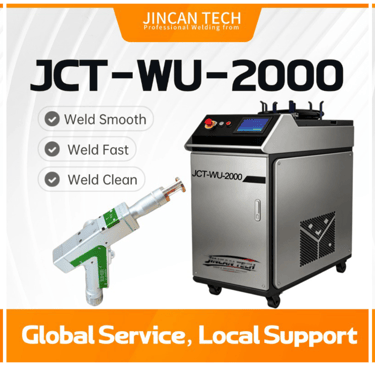
On the other hand, the 2000w laser welder provides a versatile option for both medium and advanced welding tasks. This power level allows it to handle materials up to approximately 8mm thick, significantly improving performance in both speed and penetration compared to the 1500w version. It strikes a balance between precision and efficiency, making it a favored choice for manufacturers looking to optimize production rates while ensuring quality welds.
However, as production requirements increase, limitations start to appear. When dealing with thicker materials or requiring faster welding speeds, a 2000W machine becomes more practical. This power level is currently the most popular choice in the market. It provides a good balance between performance and cost. It can handle materials up to 5mm in many cases, and it works well across a wide range of industries, from furniture manufacturing to metal processing.
Finally, the 3000w laser welder, with its high power output, is designed for heavy-duty applications. It can efficiently weld materials over 10mm thick, allowing for versatile use in industries like automotive and heavy machinery fabrication, where thick plate welding is common. However, this level of power may require enhanced cooling systems, resulting in higher operational costs and maintenance than its lower wattage counterparts.
The 3000W laser welder is designed for more demanding applications. It is suitable for thicker materials, heavy-duty work, and continuous industrial production. With higher power, welding speed increases, and penetration becomes deeper. However, this also comes with higher cost and higher energy consumption. For businesses that do not require such capacity, choosing 3000W may result in unnecessary investment.
By evaluating these parameters—material thickness capability, cooling requirements, operational cost, and overall performance—users can better determine which laser welder fits their specific needs. Whether the objective is precision or capacity, understanding these variables ensures optimal selection in laser welding technology.
Choosing the Right Laser Welder for Your Needs
When it comes to selecting the appropriate laser welder, several key factors come into play. The most critical aspect to consider is the specific project requirements you have, including the types of materials you will be working with and the thickness of those materials. For instance, 1500W laser welders may be sufficient for thinner metals or applications that do not demand high precision and power. Conversely, if your projects involve thicker materials or require high-speed welding, a 2000W or even a 3000W laser welder would be more appropriate.
Budget constraints further influence the decision. While higher-powered machines can enhance productivity, they also come with a higher price tag and increased operational costs. Understanding your budget will allow you to narrow down your choices and find a machine that balances power and affordability. It is wise to assess both the initial investment and the long-term costs associated with maintenance and energy consumption.
Additionally, the skill level of the user must be taken into account. For beginners, starting with a more manageable and less powerful laser welder, such as the 1500W option, could provide a gentler learning curve. As skills improve and project complexity increases, transitioning to a more powerful machine might be beneficial.
In various industries, specific power levels have proven advantageous. For example, the automotive sector often benefits from the quick and precise capabilities of a 2000W laser welder when joining components. In contrast, industries requiring extensive sheet metal work might lean towards a 3000W machine for its robust capabilities. By evaluating these practical applications, individuals can better discern which laser welder best suits their unique requirements.
Another important factor to consider is workflow. If your production involves mostly thin materials and occasional thicker parts, a 2000W machine may be more flexible. On the other hand, if your work is consistently heavy-duty, investing in 3000W can improve efficiency in the long run.
Future Trends in Laser Welding Technology
As the laser welding industry continues to evolve, several current trends and predictions have emerged regarding advancements in this technology. One of the key developments is the increasing focus on power efficiency, enabling manufacturers to achieve higher levels of performance without disproportionately increasing energy consumption. Higher efficiency not only leads to cost savings but also minimizes the environmental impact associated with welding operations.
Additionally, new laser welding methods are being developed to address specific applications and material types. For instance, techniques such as hybrid laser welding, which combines laser welding with traditional welding methods, are gaining traction. This approach allows for greater versatility, as it can work on various materials and thicknesses, thus broadening the range of projects that can be undertaken with a single welder.
Moreover, the advent of advanced materials has implications for the power requirements of laser welders. With lightweight and high-strength materials becoming more prevalent in industries such as automotive and aerospace, there is a growing demand for welding solutions that can handle these new substrates effectively. This trend points to the necessity of adapting laser power settings; thus, understanding whether to invest in a 1500w, 2000w, or 3000w laser welder becomes increasingly important as materials evolve.
Furthermore, the shift toward automation is poised to reshape the landscape of laser welding. Automated systems are being integrated into manufacturing lines to improve efficiency, accuracy, and scalability. As automated technology advances, there will likely be a greater emphasis on higher power welders capable of supporting faster and more consistent results. Companies looking to stay at the forefront of the industry should consider the implications of these trends on their current and future laser welding needs.
Budget is always part of the decision, but it should not be the only factor. A lower-cost machine that cannot meet your needs may limit your business growth. At the same time, over-investing in a high-power machine without sufficient workload can reduce your return on investment.
It is also worth thinking about your target customers if you are a distributor. Offering multiple power options allows you to cover different market segments. Entry-level buyers usually prefer 1500W, while professional users tend to choose 2000W or 3000W.
In practice, many experienced users recommend starting with 2000W unless there is a clear reason to choose otherwise. It is versatile, efficient, and suitable for most common applications.
In conclusion, choosing the right power is not about picking the highest number. It is about understanding your materials, production needs, and future plans. Making a balanced decision will help you get the most value from your investment.