Laser Welder Price & Handheld Welding Machine Costs
Discover the factors affecting laser welder prices, including the cost of handheld laser welding machines. Learn how to choose the right laser welder price based on your budget and needs.
4/11/20265 min read
Understanding Handheld Laser Welding Technology
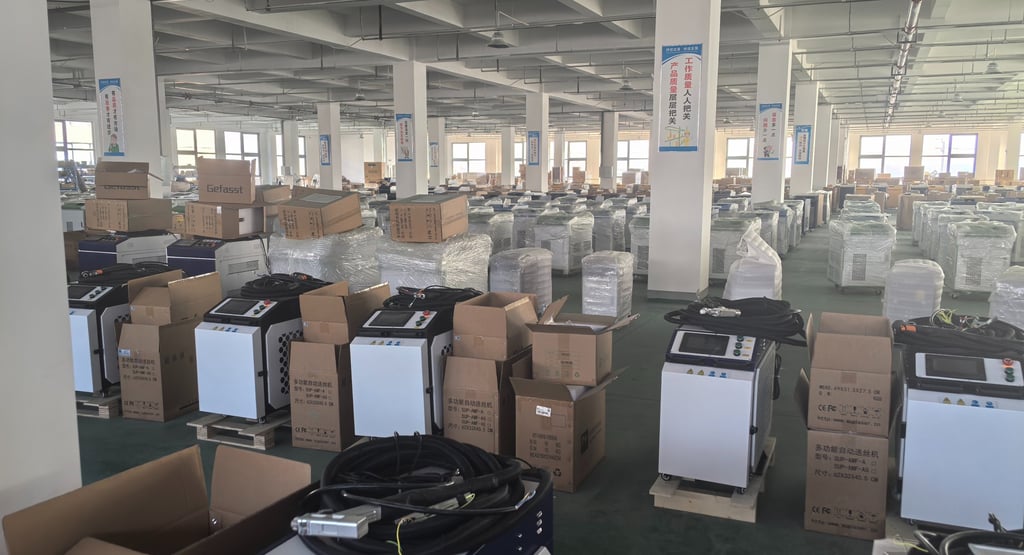
Handheld laser welding technology represents a significant innovation in the field of metal joining. This process utilizes concentrated beams of light, typically emitted from solid-state, fiber, or CO2 lasers, to melt and fuse materials together. The ability to direct a high-intensity laser beam to precisely target and weld various metals has transformed welding practices across multiple industries.
The working mechanism of handheld laser welding involves generating a laser beam which is then directed onto the materials needing to be joined. The focused energy of the beam raises the temperature of the metal surfaces sufficiently to create a molten pool. Once the beam is moved away, the molten pool solidifies, forming a strong and precise weld. This technique is applied in diverse fields such as automotive manufacturing, aerospace, electronics, and metal fabrication, mainly due to its speed and accuracy.
One of the primary advantages of handheld laser welding over traditional welding methods, like MIG or TIG, is its versatility. The portability of handheld units allows for easy operation in tight spaces and on-site applications. Additionally, this technology produces minimal thermal distortion and ensures high-quality welds with a clean finish. The lower heat-affected zone reduces the risk of warping or damaging adjacent areas, making it an ideal choice for intricate or sensitive projects.
The principal components of a handheld laser welder include the laser source, which generates the laser beam, and the cooling system, which ensures the equipment maintains optimal operating temperatures. Recent advancements in laser welding technology have also introduced improvements in beam quality and power efficiency, which may affect the overall price of these tools in 2026. Manufacturers are consistently innovating, integrating automation and advanced optics to enhance performance and user experience. As this technology continues to evolve, it is crucial for potential buyers to be aware of these advancements when considering their investment.
Factors Influencing the Price of Handheld Laser Welders
When buyers first start researching handheld laser welding machines, price is usually the first question. However, prices can vary widely, and understanding what drives the cost is more useful than focusing on the number itself.
One of the main factors is laser power. Machines typically range from 1500W to 3000W. Higher power generally means higher cost, but also wider application capability.
The price of handheld laser welders in 2026 is determined by a variety of factors that potential buyers should consider carefully. One of the most significant elements is the power output of the laser. Handheld laser welders typically range in power, with higher wattage models providing more performance and versatility, but also commanding a higher price. For instance, welders that can handle thicker materials or deliver faster welding speeds are likely to be priced considerably higher compared to their lower-powered counterparts.
Brand reputation also plays a pivotal role in pricing. Established brands known for their quality and reliability tend to charge more for their products, as they offer warranties, customer support, and consistent innovation. Newer brands may provide lower prices to penetrate the market, but it is crucial to evaluate their reviews and performance benchmarks before making a purchase.
Build quality is another impactful factor. Higher-quality materials and advanced engineering lead to more durable handheld laser welders. Users can expect to pay a premium for welders that provide enhanced stability, reduce maintenance costs, and offer longer lifespans. Features such as portability and ease of adjustment add additional costs but may significantly improve user experience and operational efficiency.
Another important factor is the laser source. Different brands offer different levels of stability and lifespan. Premium brands cost more, but may provide better long-term performance.
Configuration also matters. Components such as the cooling system, welding head, and control software all influence the final price. A balanced configuration often performs better than simply choosing the highest specifications.
Portability and design also affect pricing. Lightweight and compact machines are usually more convenient but may cost more.
Automation and advanced technological features also influence price points. Handheld laser welders equipped with smart technology for process control and feedback may have higher upfront costs but can ultimately lead to savings in time and labor. Additionally, market demand continues to shape the pricing trends within the industry. As industries increasingly adopt laser welding technologies, prices may fluctuate based on supply and demand dynamics, impacting the overall market landscape for handheld laser welders.
Cost Comparison: Handheld Laser Welders vs. Traditional Welding Methods
In contemporary welding practices, the choice between handheld laser welders and traditional welding methods, such as MIG, TIG, and spot welding, significantly impacts both upfront and ongoing costs. Understanding these financial implications is crucial for businesses aiming to optimize their operations.
Initially, handheld laser welders typically present a higher capital investment compared to traditional welding machines. The advanced technology behind laser welding necessitates sophisticated equipment, which often results in a price point that can exceed that of MIG, TIG, or spot welding setups. Traditional methods, while generally less expensive upfront, may not always offer the same level of efficiency, precision, or versatility as handheld laser welders.
When considering ongoing operational costs, handheld laser welders can prove advantageous. They require less energy and typically generate less heat, which reduces expenses related to power consumption and additional cooling systems. Conversely, traditional welding methods such as MIG and TIG are often associated with higher gas and consumable costs (like electrodes and filler materials), along with increased wear and tear on equipment.
Maintenance expenses also differ significantly between these welding techniques. Handheld laser welders tend to require less frequent maintenance, as they feature fewer moving parts and a more stable technology platform. In contrast, the maintenance requirements of traditional welding equipment tend to be higher, primarily due to the wear on consumables and the necessity for regular parts replacement.
Nonetheless, it is essential to consider the long-term advantages that handheld laser welders offer. Despite higher initial costs, the potential for increased productivity, reduced operational costs, and lower maintenance requirements can lead businesses to substantial savings over time. Additionally, the precision offered by laser welding often results in fewer defects, decreasing the likelihood of costly rework and enhancing overall profitability.
Future Trends and Pricing Predictions for Handheld Laser Welders
As industries increasingly adopt handheld laser welders, understanding future trends and pricing predictions becomes crucial for businesses seeking to invest in this technology. One major influence on pricing is anticipated technological advancements. In the coming years, we may see improvements in laser efficiency, operational versatility, and automation integration. Such innovations are likely to reduce manufacturing costs and improve the overall quality of handheld laser welding equipment. Consequently, a decrease in prices for high-feature models could be expected, making them more accessible for small to medium enterprises.
Another significant factor is the potential for regulatory changes impacting the laser welding industry. Increased safety standards, environmental regulations, and energy efficiency mandates may reshape production processes. As manufacturers strive to comply with new regulations, additional costs could arise. However, these regulations may also spur innovation, leading to advanced products that justify their price points due to enhanced safety and efficiency.
The state of the global economy is an additional element that may influence future handheld laser welder prices. Fluctuations in material costs, trade dynamics, and economic downturns can affect manufacturing expenses. For example, if the availability of raw materials decreases due to global supply chain issues, manufacturers may face increased production costs, which could, in turn, be reflected in retail prices. Conversely, a stable or thriving economy could enhance production capabilities and competition, potentially lowering costs.
Expert predictions generally suggest that the market for handheld laser welding equipment will continue to expand. As various sectors, including automotive, aerospace, and manufacturing, recognize the advantages of handheld laser welding, demand will likely rise. This growing interest may further stimulate competition, leading to better options and pricing for consumers.
From a business perspective, it is important to look at total cost. A machine that improves efficiency and reduces labor can justify a higher upfront investment.
In many cases, mid-range models offer the best balance between cost and performance.