Maximize Workshop Efficiency with laser welding machine
Discover why many workshops struggle with efficiency using a 1500W laser welding machine. Learn the key reasons and how laser welding can enhance speed, reduce labor costs, and improve overall production workflow.
5/17/20263 min read
Understanding the 5 in 1 Laser Welding Machine 1500W
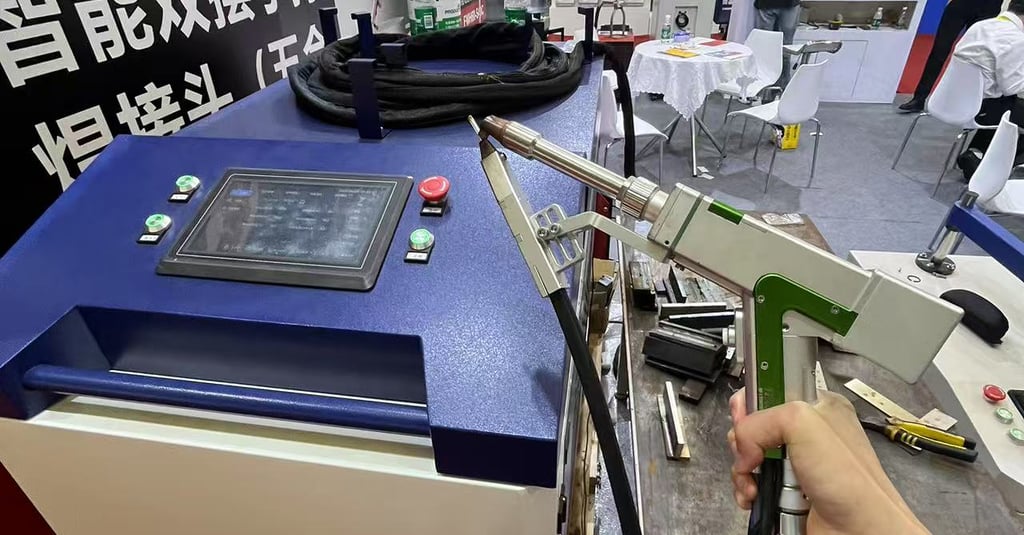
The 5 in 1 laser welding machine 1500W represents a significant advancement in welding technology, integrating multiple functionalities into a single device. This machine is designed to perform various welding processes including laser welding, cutting, engraving, and more, making it an invaluable tool for workshops seeking versatility in their operations. With a power output of 1500W, it is capable of handling diverse materials such as metals, plastics, and ceramics, thereby catering to a wide range of applications.
Many metal workshops in Vietnam are already interested in upgrading from traditional welding to laser welding. However, after buying a 5 in 1 laser welding machine 1500W, some factories still struggle with low efficiency, unstable weld quality, or unnecessary downtime.
The problem is usually not the machine itself. In most cases, workshops fail to optimize workflow, material preparation, or operator habits.
This article explains the real reasons why many workshops cannot maximize the value of a 5 in 1 welding machine and how to improve production efficiency.
What Is a 5 in 1 Laser Welding Machine?
A 5 in 1 laser welding machine combines:
Laser welding
Weld seam cleaning
Rust removal
Metal cutting
Battery pulse spot welding
Compared with traditional MIG or TIG welding, it reduces multiple process steps into one compact system.
For many sheet metal workshops, this means:
Less equipment investment
Lower labor dependency
Faster production workflow
Less grinding and polishing
Why Many Workshops Still Have Low Efficiency
1. Operators Still Use Traditional Welding Habits
Many workers continue using laser welding like MIG welding. They move too slowly or apply unnecessary finishing processes.
Laser welding works differently. It requires stable hand movement and proper parameter settings.
Without adjusting workflow habits, workshops cannot fully benefit from laser technology.
2. Poor Material Preparation
Oil, paint, rust, or dirty surfaces reduce welding consistency.
Some factories skip cleaning before welding. This creates unstable weld seams and increases rework.
Using the cleaning and rust removal functions before welding can improve overall stability.
3. Wrong Power Selection for Production Needs
Some factories use low-power systems for thick materials. Others use excessive power on thin sheet metal.
A 1500W handheld laser welding machine is usually ideal for:
Stainless steel sheet fabrication
Kitchen products
Cabinets
Doors and windows
Thin carbon steel processing
Correct application matching is critical.
4. Switching Processes Too Slowly
Traditional welding workflows often involve:
Welding
Grinding
Cleaning
Polishing
Reworking
A 5 in 1 laser welding machine reduces these steps. But some workshops still keep the old production structure.
This limits efficiency improvements.
How 5 in 1 Welding Improves Workshop Efficiency?
Faster Welding Speed
Compared with traditional MIG welding, laser welding can be 2–3x faster.
This is especially important for:
Batch production
Stainless steel fabrication
Thin sheet processing
Kitchen manufacturing
Less Grinding and Rework
Traditional welding usually creates:
Heavy weld marks
Excess spatter
Burn-through problems
Uneven seams
Laser welding produces cleaner welds. This reduces polishing time significantly.
Multi-Function Integration
Instead of moving materials between machines, operators can complete multiple tasks using one system.
This reduces:
Setup time
Tool switching
Labor waste
Workshop congestion
Lower Labor Dependency
Many factories struggle to hire experienced welders.
Laser welding is easier to learn. New operators can become productive faster.
Best Applications for 5 in 1 Laser Welding Machine 1500W
The machine is highly suitable for:
Stainless steel kitchen products
Sheet metal fabrication
HVAC production
Door and window manufacturing
Metal furniture
Elevator panels
Advertising signs
For workshops handling thin materials daily, efficiency gains are obvious.
Common Mistakes That Reduce Laser Welding Performance
Ignoring Gas Settings
Improper shielding gas affects weld appearance and penetration.
Wrong Speed Settings
Moving too slowly creates overheating. Moving too fast reduces weld consistency.
Using Traditional Finishing Logic
Some factories continue excessive polishing even when laser welds already look clean.
This wastes labor.
Why More Vietnam Workshops Are Switching to 5 in 1 Welding?
Labor costs are increasing. Customers also expect faster delivery and cleaner weld appearance.
Traditional welding methods are becoming harder to scale.
That is why more Vietnam metal workshops are adopting handheld laser welding systems.
The goal is not only speed. It is also stable production and lower operating cost.
Solution: Upgrade Workflow, Not Just Equipment
Buying a 5 in 1 laser welding machine alone is not enough.
Workshops must also:
Train operators properly
Optimize welding workflow
Use correct material preparation
Reduce unnecessary grinding
Match power settings correctly
When used properly, a 1500W 5 in 1 welding machine can significantly improve production efficiency.
Conclusion
Many workshops fail to get full efficiency from 5 in 1 welding because they still use traditional production habits.
The real advantage of laser welding comes from workflow optimization, faster operation, and reduced rework.
For metal workshops in Vietnam, upgrading to a handheld 5 in 1 laser welding machine can reduce labor pressure and improve production speed.
Want to see real factory welding videos and production comparisons? Contact us now for machine details, demo videos, and distributor support.