5 Key Industrial Specifications to Check Before
Buying a CO2 Laser Engraving Machine
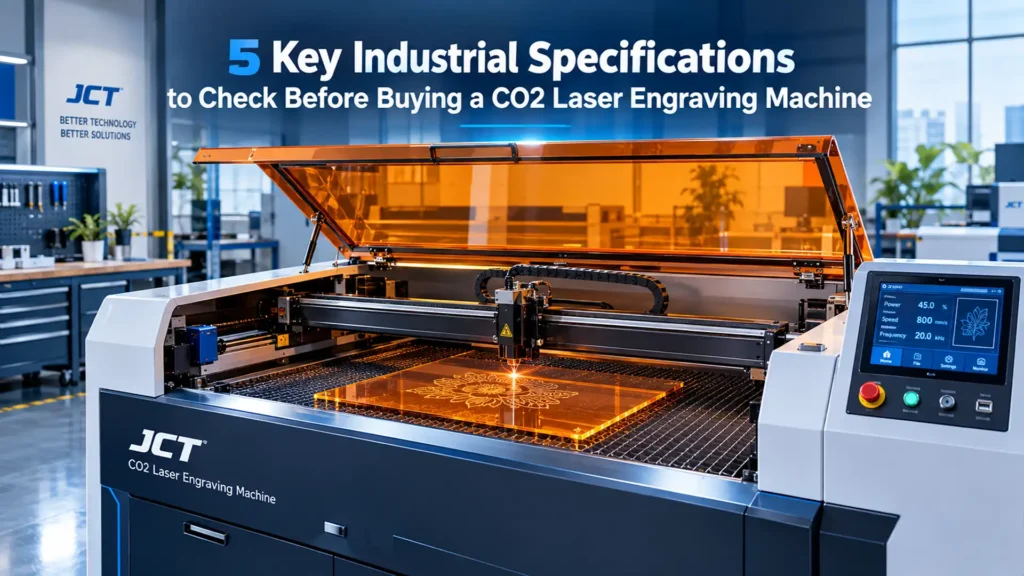
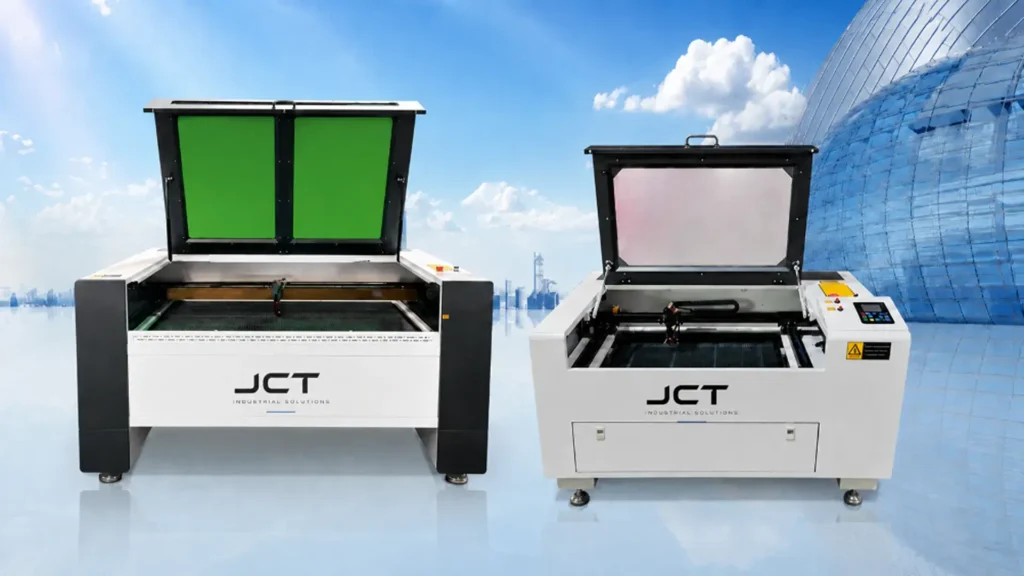
Equipping a custom sign-making workshop, craft studio, or precision non-metal processing plant requires a strategic balance of workspace, precision, and capital expenditure. A common pitfall in equipment procurement is the assumption that heavier, oversized industrial monoliths are always superior. In practice, for standard commercial fabrication—ranging from compact 3040 benchtop units to versatile 160×90 large-format production beds—over-investing in unnecessary heavy-duty frames only drains workshop space and inflates utility costs. Selecting the right CO2 laser engraving machine demands a rigorous technical audit of internal sub-systems. If your engineering team is preparing to upgrade production capabilities, here are the 5 core specifications you must verify to ensure long-term operational stability and optimal return on investment.
1. Motion Control Architecture
A laser system is only as smart as its motion brain. Inferior, proprietary controllers frequently suffer from file translation errors, buffer freezes, and step-loss during high-speed vector cutting, which ruins expensive sheets of acrylic or wood.
Reliable industrial cutting and engraving rely on proven motion controllers—such as Ruida mainboards (e.g., Ruida 6445 or M3 series)—integrated with professional stepper motors and high-performance drivers (Leadshine or Delta micro-stepping drivers). This architecture ensures high-speed acceleration without resonance, precise vector-to-raster synchronization, and seamless file execution via USB or Ethernet, eliminating production downtime caused by software glitches.
2. Laser Energy Core
The laser tube is the heart of any CO2 system, yet many buyers neglect its brand pedigree and power attenuation curves. Cheap, unverified tubes experience rapid power degradation and thermal instability within weeks of commercial operation.
Sustainable cutting performance requires verified glass laser tubes—such as EFR laser tubes—paired precisely with your workload. For delicate benchtop engraving (4030/4040 models), 40W to 50W configurations provide fine beam spots. For deeper commercial cutting on mid-to-large beds (such as 7050, 1390Z, 1490Z, and 1610Z), stepping up to 100W, 130W, or 150W power tiers ensures consistent energy density, clean edge fusion, and extended tube longevity.
3. Mechanical Rail Tolerance
Mechanical rigidity dictates whether a machine maintains its calibration after thousands of hours of operation. Light sliding rails on commercial machines often warp or vibrate under rapid gantry movements, resulting in tapered edges and blurred engraving.
The choice of guiding mechanics should align with your production scale. While compact entry units utilize internal slide rails for space-saving benchtop utility, professional production models (like 7050E, 1390Z, and 1610Z) require heavy-duty 12mm or 15mm linear guide rails. Precision linear guides eliminate lateral play, absorb high-speed gantry inertia, and maintain micron-level optical alignment over years of multi-shift manufacturing.
4. Thermal and Pneumatic Safeguards
Overheating is the primary cause of premature laser tube failure. Without precise temperature regulation, high-power CO2 tubes suffer from beam distortion and catastrophic thermal cracking.
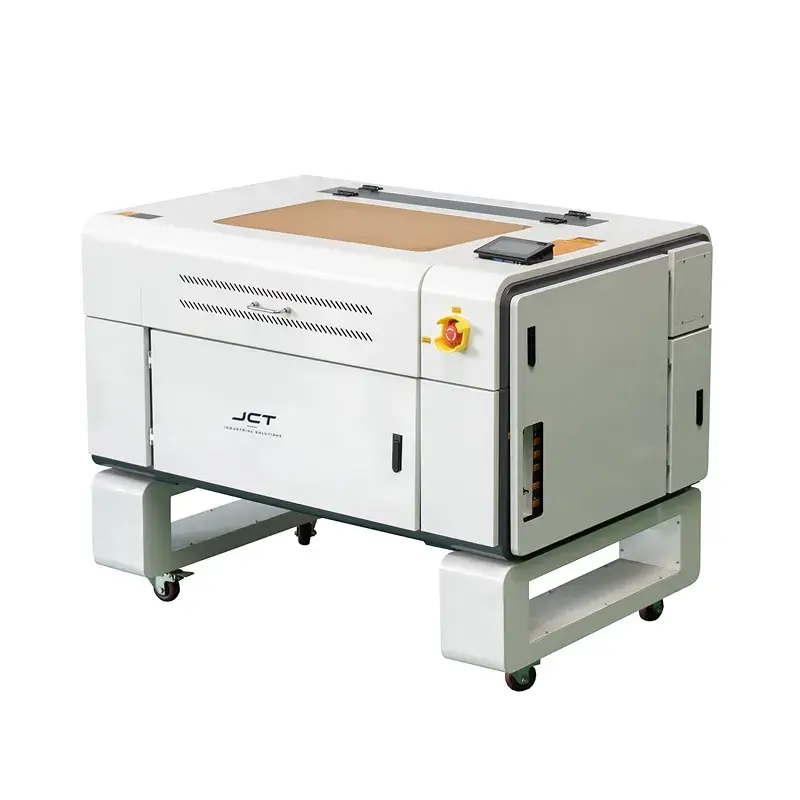
Robust thermal management separates hobbyist gear from professional commercial systems. While basic setups utilize simple water pumps for low-power tasks, demanding industrial workflows necessitate integrated Huanyuan (环立) industrial water chillers (such as Huanyuan 3000 or 5200 models). Combined with built-in silent air pumps and proper exhaust baffling, closed-loop cooling stabilizes operating temperatures, protects optical lenses from smoke contamination, and prevents costly thermal breakdowns.
5. Workspace Optimization
Sizing your work envelope incorrectly either limits your commercial bidding capacity or creates wasted floor space and idle energy overhead.
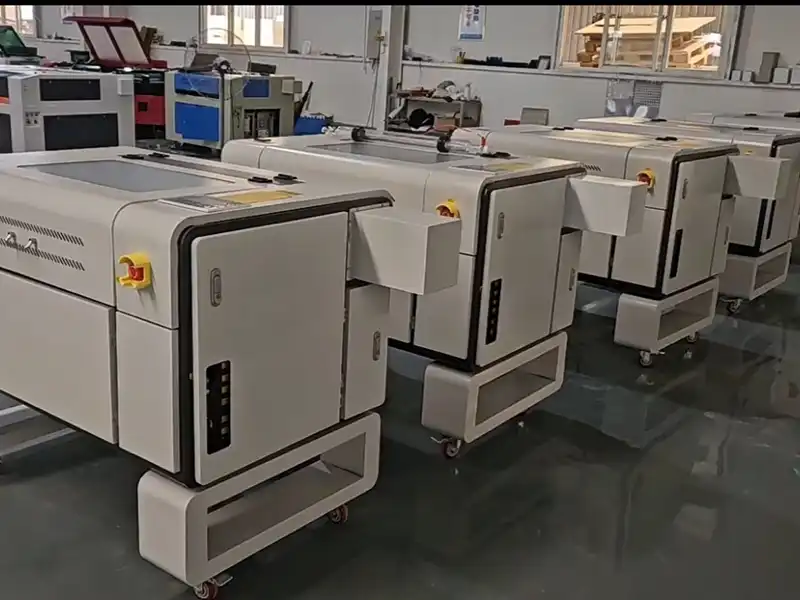
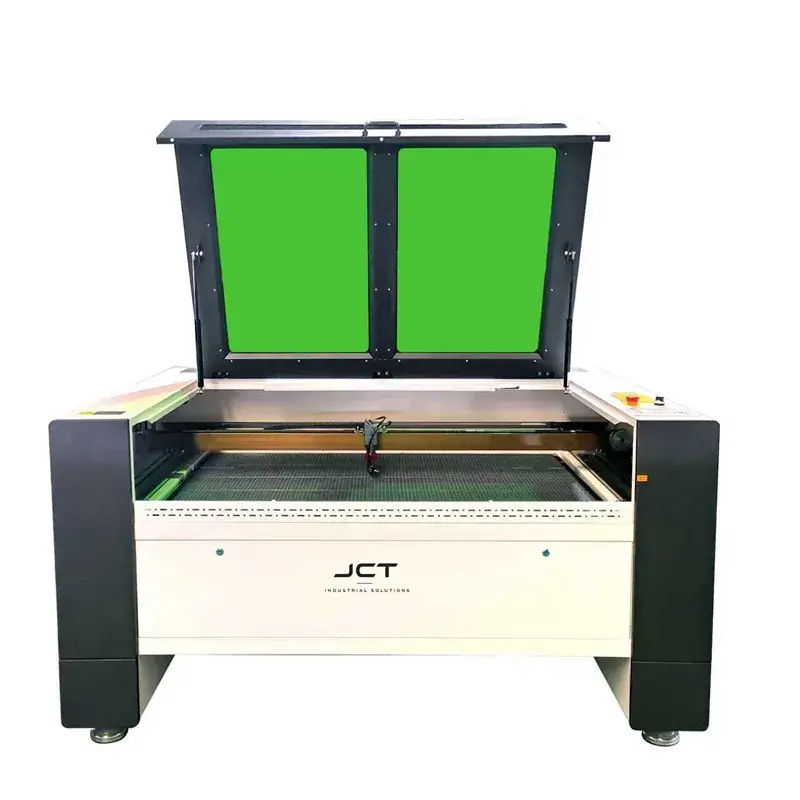
Practical engineering focuses on right-sized versatility. A comprehensive sizing matrix—scaling logically from 4030, 4040, 6040, 9060, and 7050, up to wide 1390, 1490, and 1610 platforms—allows workshops to match exact operational footprints. Coupled with dual-platform designs (interchangeable honeycomb panels for flexible materials and knife blade strips for thick acrylics to eliminate backside reflection), shops achieve maximum material utilization without paying for oversized heavy-duty structures.
Conclusion
Evaluating a CO2 laser engraving machine is an exercise in engineering pragmatism. By focusing on transparent, high-grade specifications—such as Ruida motion control, EFR laser tubes, linear guide rigidity, and Huanyuan thermal regulation across versatile 3040 to 160×90 working envelopes—technical managers can eliminate operational risks and maximize throughput. For facilities seeking reliable, precision-engineered systems without the inflated overhead of traditional tier-one branding, sourcing directly from specialized manufacturers provides an optimal balance of quality and value.If you still not how to choose ,please contact with JCT specific teams