
Extreme Environmental Testing Chambers for automotive ADAS
The environmental test chamber solutions can simulate extreme road conditions—from freezing blizzards to scorching engine compartments.
The Engineering Challenge
Photovoltaic systems are expected to operate maintenance-free for over two decades under unrelenting environmental exposure. However, outdoor exposure accelerates multiple electrochemical degradation mechanisms that destroy power output if components are not rigorously screened:
EVA Hydrolysis & "Snail Trail" Discoloration
Standard Ethylene Vinyl Acetate (EVA) encapsulants are susceptible to moisture ingress. When subjected to prolonged damp-heat conditions (85°C / 85% RH), ambient water molecules react with EVA, breaking ester bonds to generate acetic acid. This acid leaches through the polymer, chemically etching the anti-reflective coating and corroding the silver busbars on the solar cell. The resulting silver carbonate micro-particles manifest as ugly dark “snail trails,” permanently dropping module conversion efficiency.
Potential Induced Degradation (PID) Under 1500V Strings
Utility-scale solar farms link panels in long strings reaching system may voltage of 1000V to 1500V. In hot, humid environments, this massive voltage bias drives sodium ions ($Na^+$) from the front glass sheet through the encapsulant and into the crystalline silicon wafer. These positive ions accumulate at the p-n junction, causing electrical shunts ,they can slash system power yield by over 30% in less than two years.
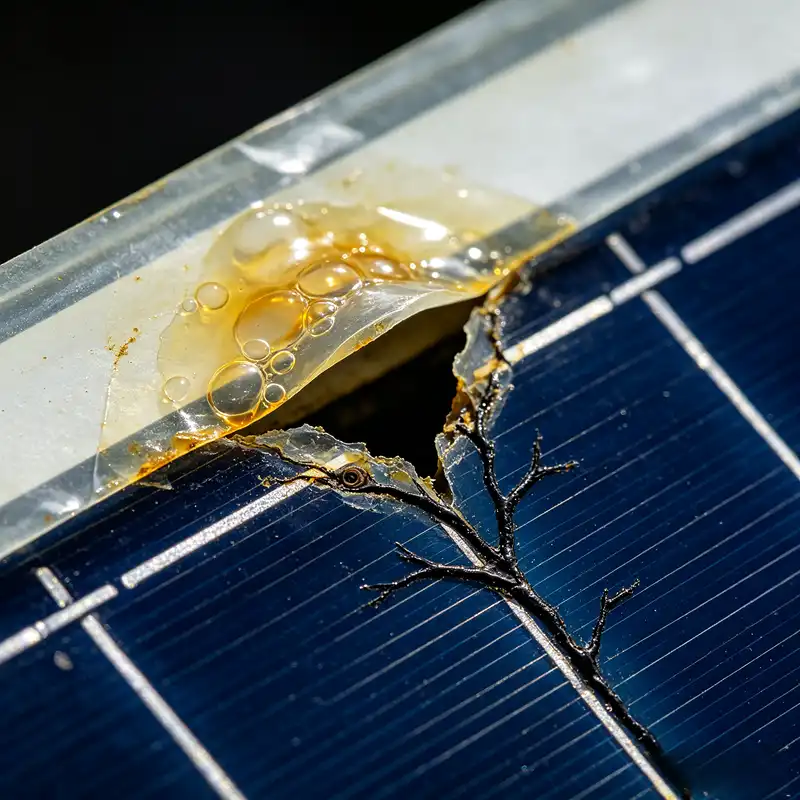
Thermal Fatigue in Bypass Diodes & Junction Boxes
When a cell is shaded by a cloud or leaf, its bypass diode in the junction box activates to redirect current, generating internal junction temperatures exceeding 130°C. In desert climates where daytime heat rapidly plunges to sub-zero night temperatures, but the solder joints and silicone pottings inside the junction box experience severe thermal shock fatigue. This leads to diode short-circuits, localized thermal runaway, and catastrophic electrical fires.
Why Photovoltaics need Climatic testing Chambers?

1,000-Hour Damp Heat Soaking (Hydrolysis Screening)
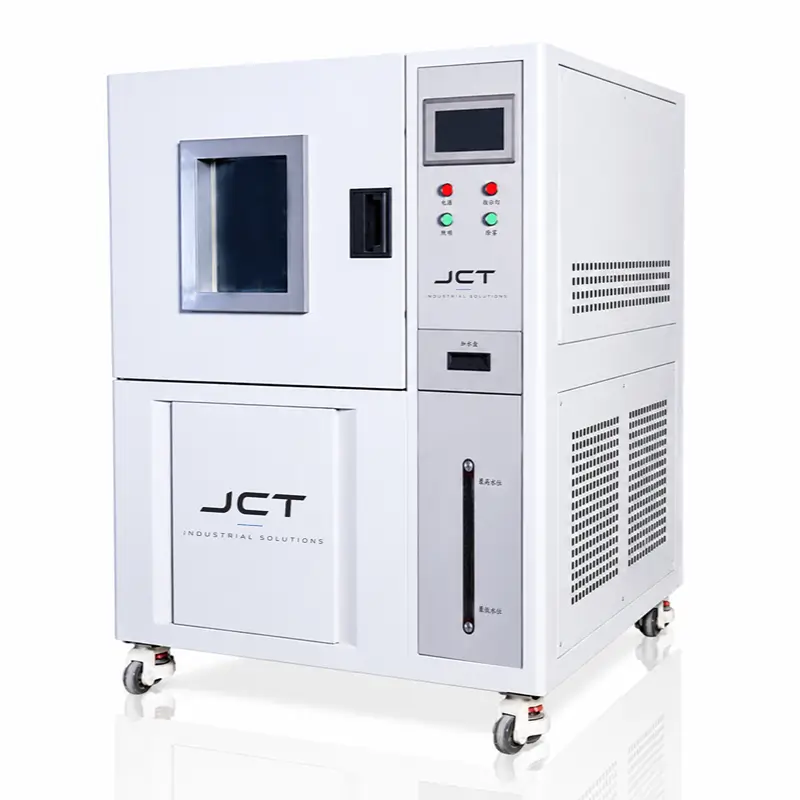
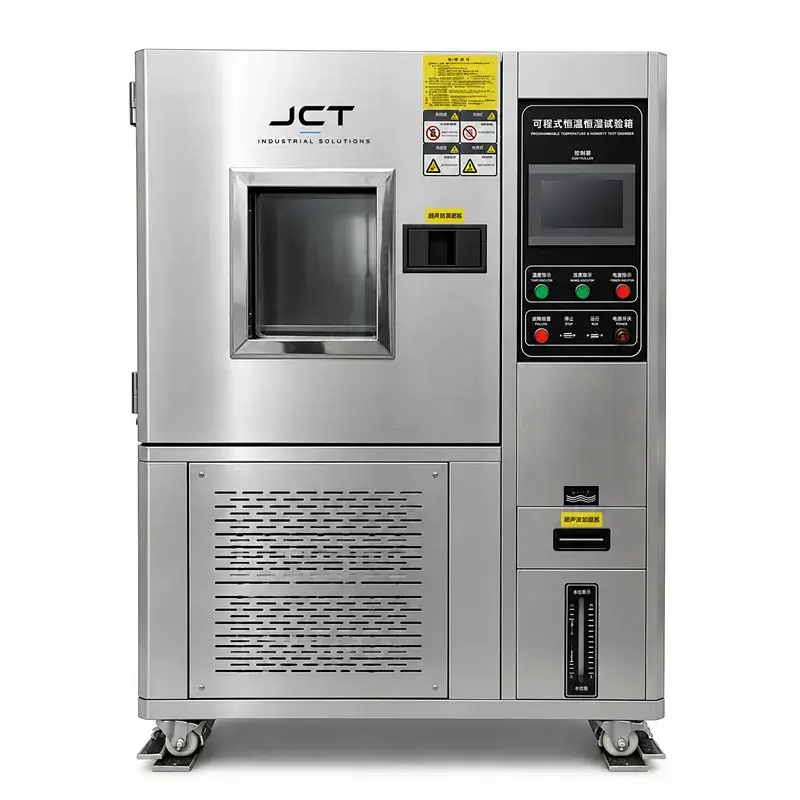
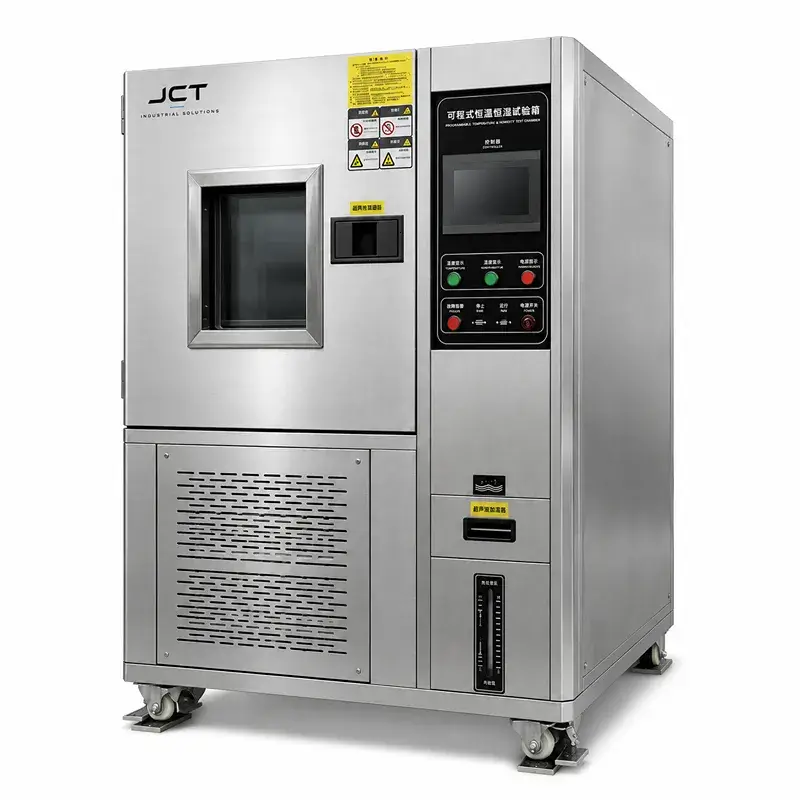
Test coupons of raw encapsulants (EVA, POE) and backsheet laminates are placed inside a JCT High-Low Temperature Alternating Damp Heat Test Chamber. Maintained at a continuous 85°C and 85% relative humidity for 1,000 to 2,000 hours, this accelerated test forces moisture penetration. It exposes cross-linking degradation, yellowing index shifts, and acetic acid formation within weeks rather than decades.

Humidity-Freeze Dynamic Shock (Adhesion Validation)
Mini-module laminates are subjected to the IEC 61215 Humidity-Freeze cycle. The chamber holds the sample at 85°C / 85% RH to saturate the boundaries with moisture, then rapidly drops the temperature to -40°C in under 4 hours, freezing the absorbed moisture into expanding ice crystals. This mechanical stress immediately strips delaminated edges, breaks weak ribbon solder joints, and fractures flawed anti-reflective coatings.
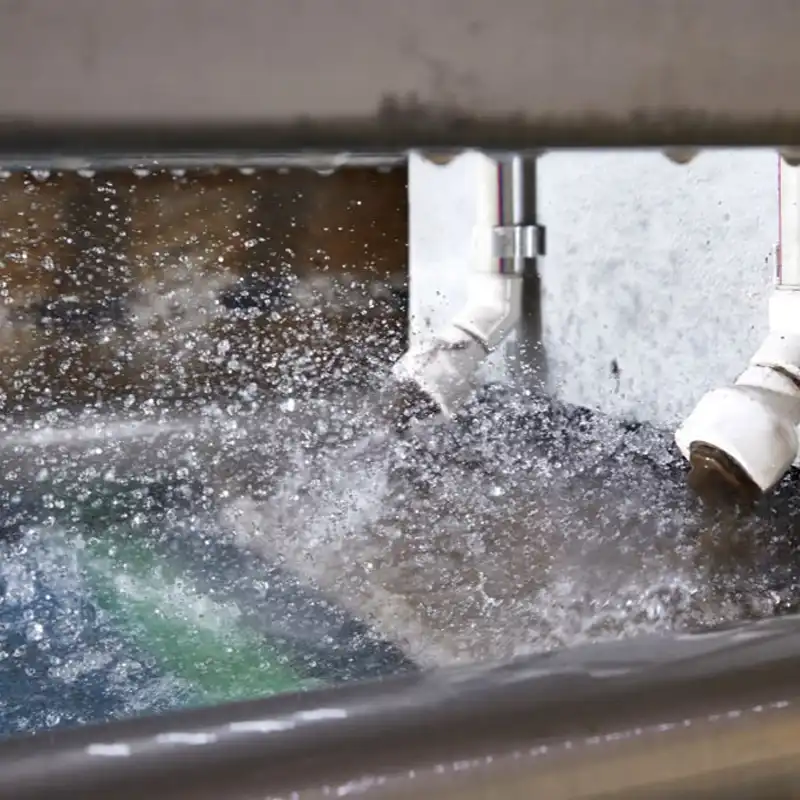
Cyclic Salt Mist & High-Voltage Environmental Stress
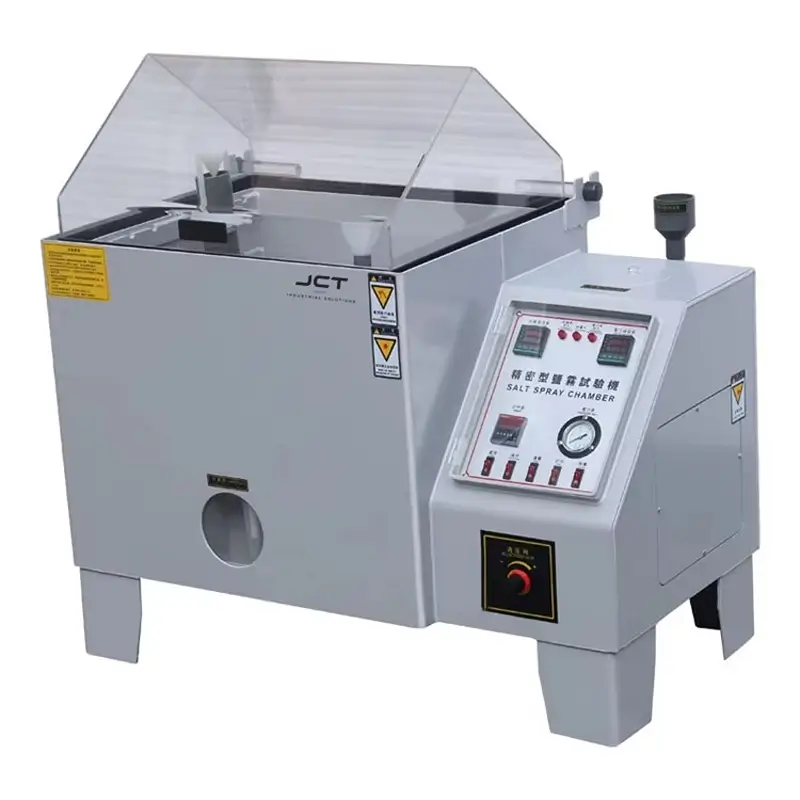
Junction boxes, MC4 cable connectors, and aluminum mounting clamps are moved to JCT Salt Spray and High-Low Temperature Chambers. Samples are subjected to cyclic corrosive fog (IEC 61701) and high-voltage electrical bias (PID simulation). This proves the water-tightness of IP68 rubber seals and ensures electrical continuity in harsh offshore floating solar installations
for Photovoltaic Testing We CAN Supply
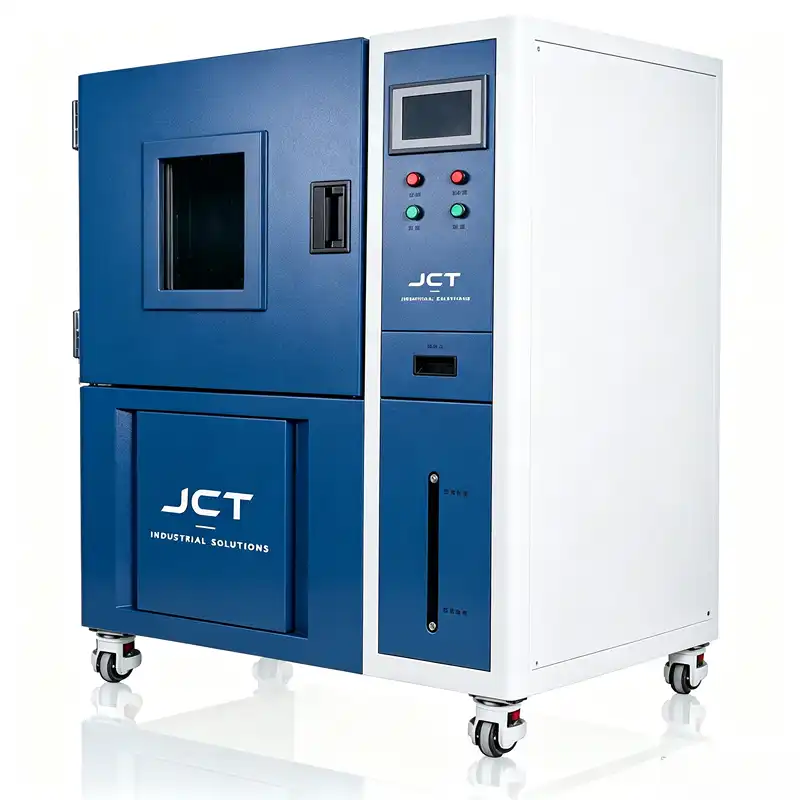
Solar cell mini-modules, EVA/POE polymer encapsulant coupons, backsheet films, and IEC 61215 Damp Heat (DH1000) & Humidity Freeze (HF10) sequences.
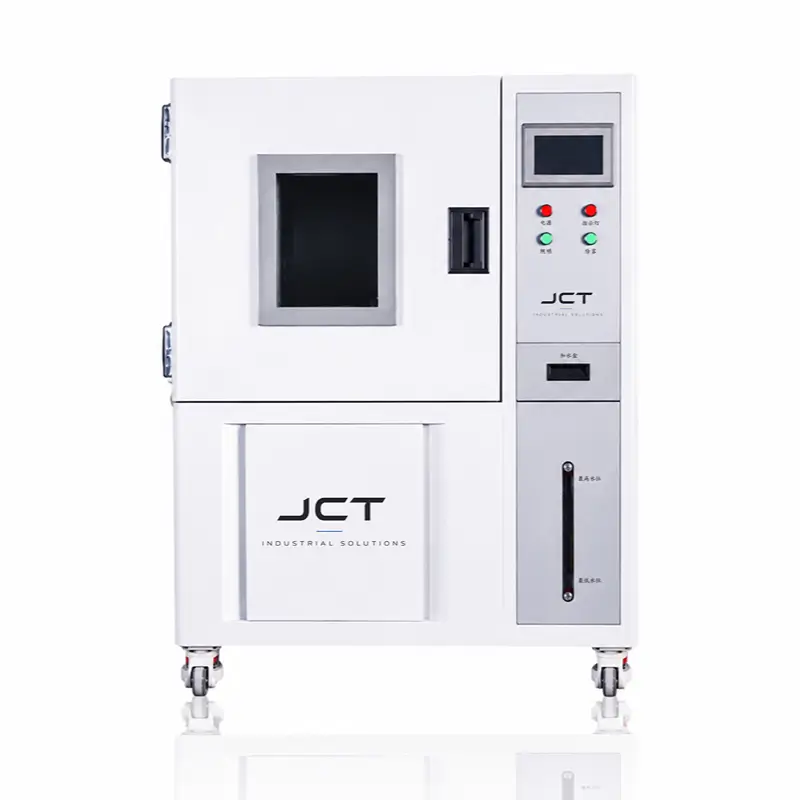
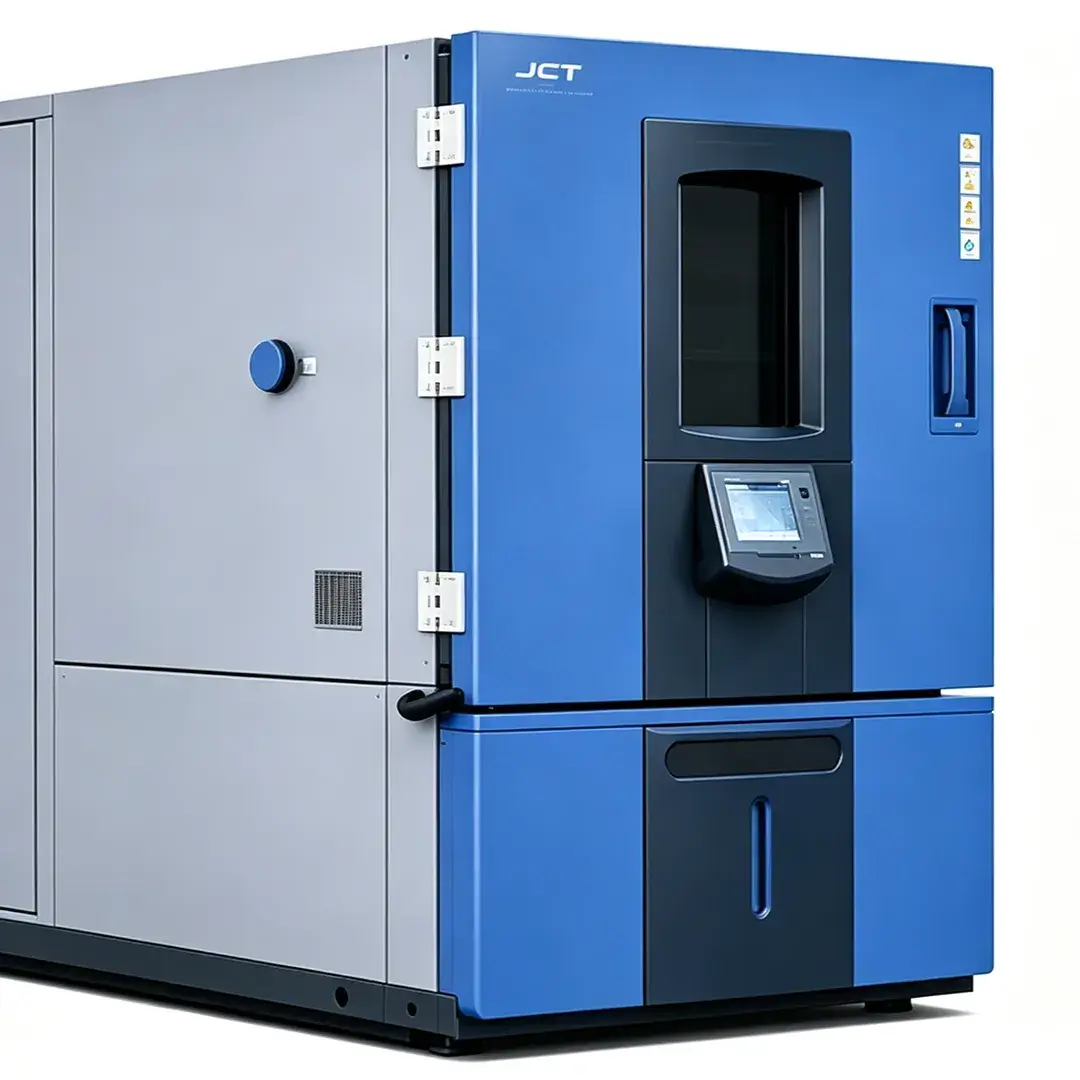
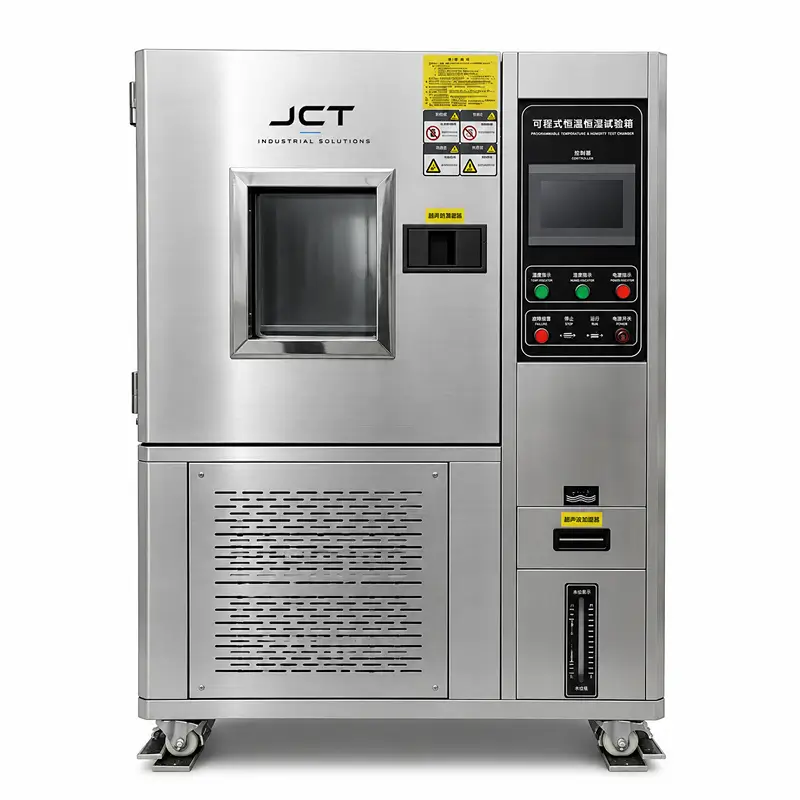
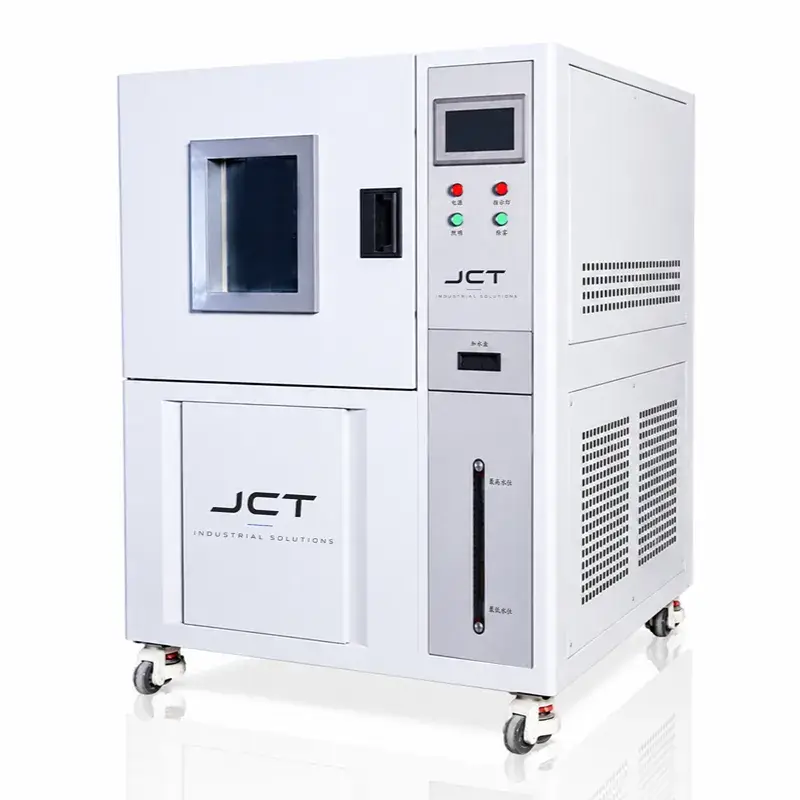
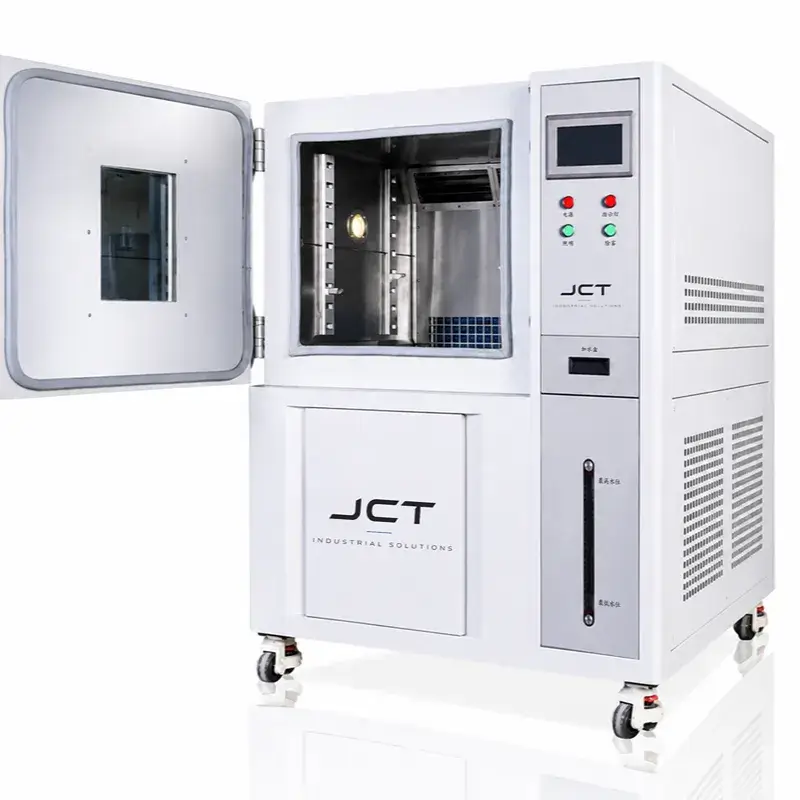
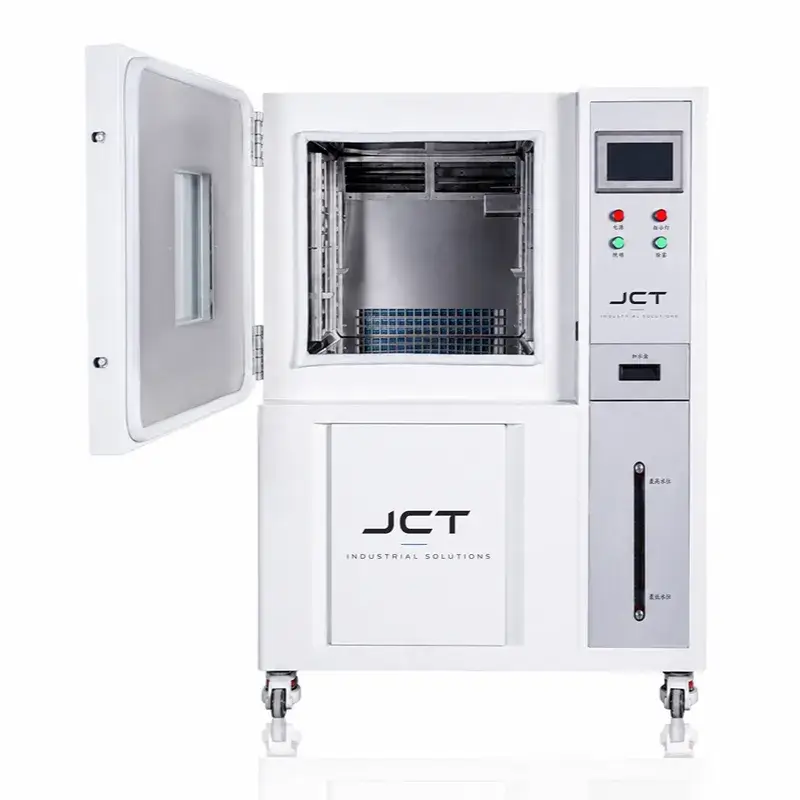
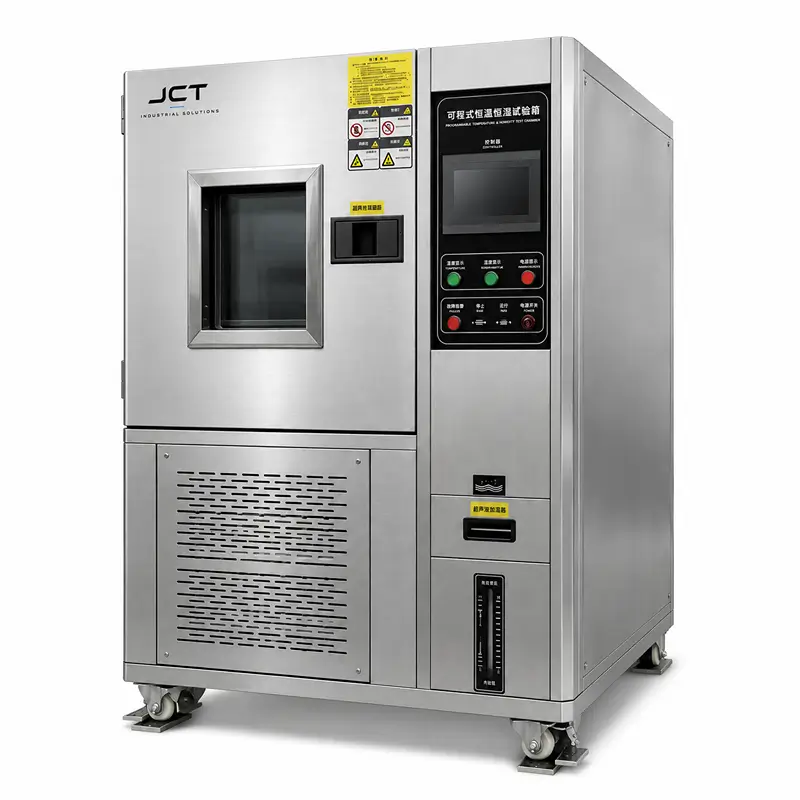
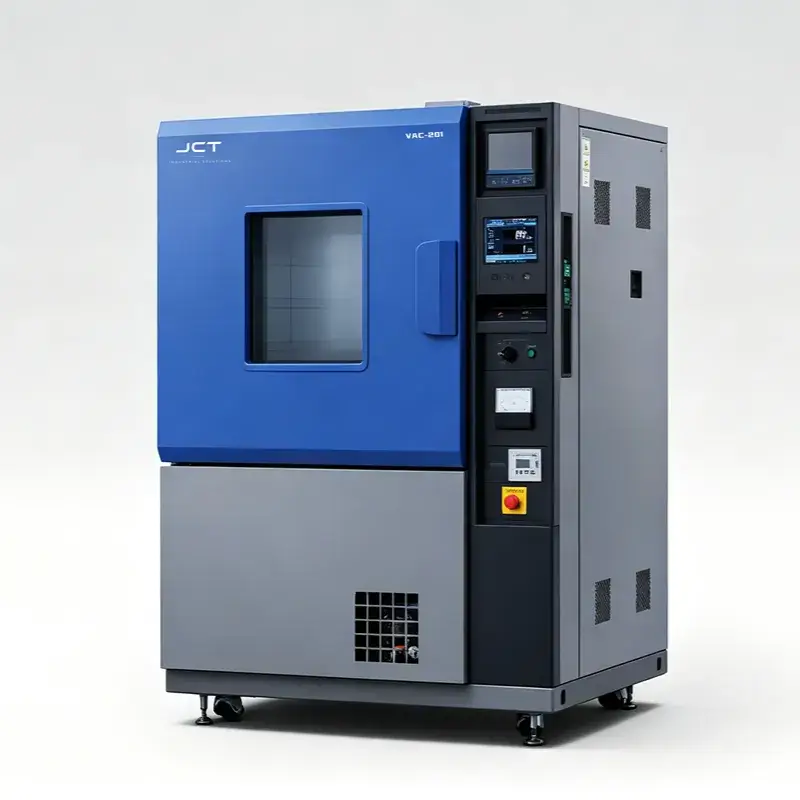
Built specifically for rigorous long-duration testing. Features advanced anti-condensation roof design that prevents condensed droplets from falling directly onto sensitive solar cell samples. Delivers precise, non-oscillating humidity control (20% to 98% RH) and wide temperature ranges (-70°C to +150°C), with programmable ramps ,it can execute continuous multi-week IEC test cycles without interruption.
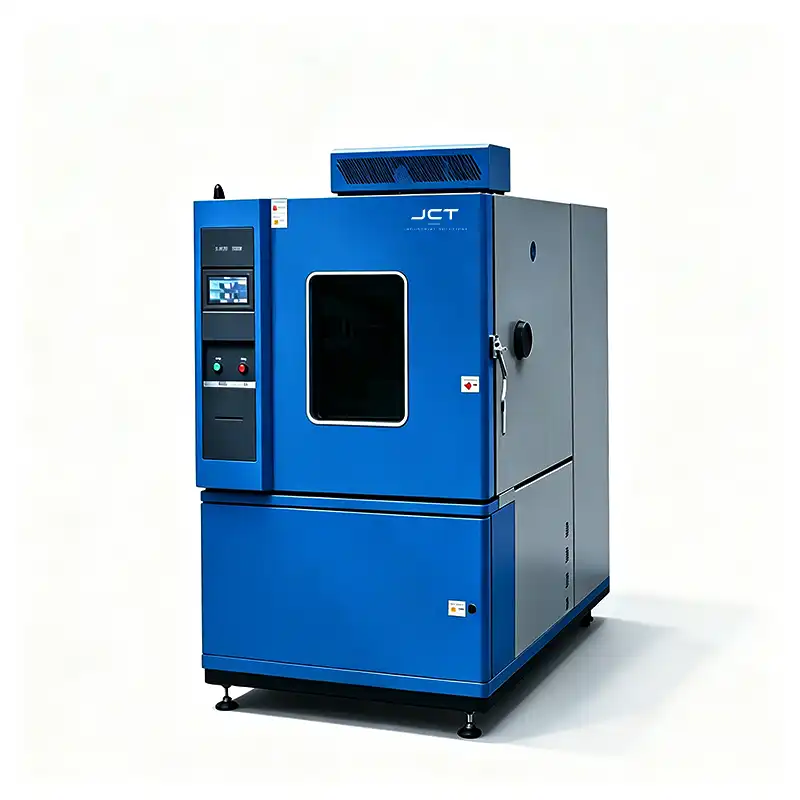
Accelerated solder ribbon fatigue testing (TC200), bypass diode thermal run-away verification, and micro-inverter power module stress screening
High-throughput thermomechanical stress. Delivers linear temperature ramp rates of 10°C to 15°C per minute, rapidly expanding and contracting solder joints between the solar cell busbars and copper ribbons. Equipped with high-capacity cascade refrigeration compressors that handle active electrical heat loads while maintaining tight spatial temperature uniformity
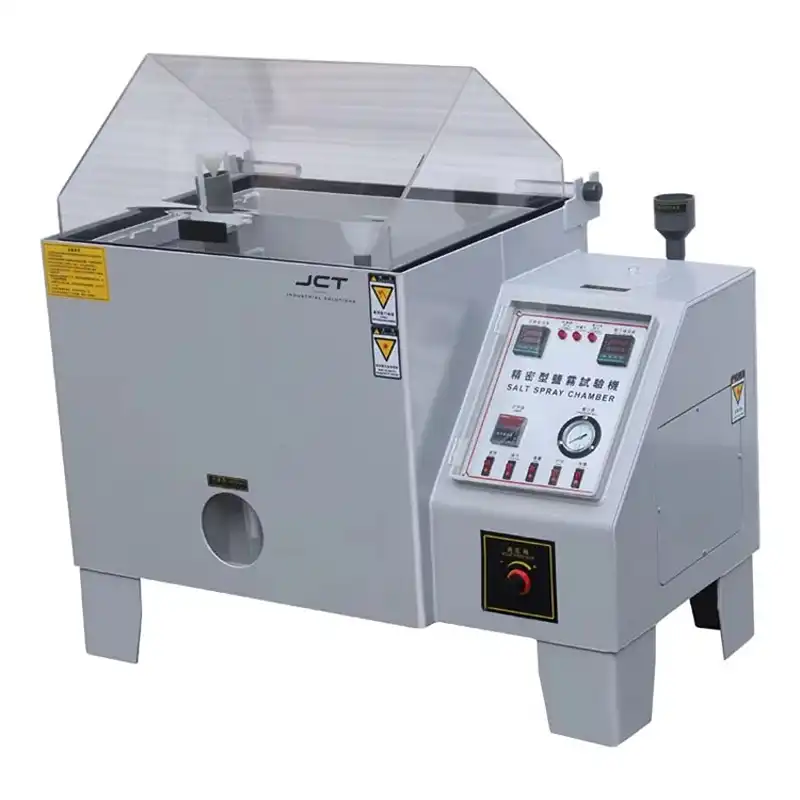
Outdoor junction boxes, IP68 MC4 connectors, anodized aluminum frames, and mounting trackers for coastal and floating PV systems (FPV).
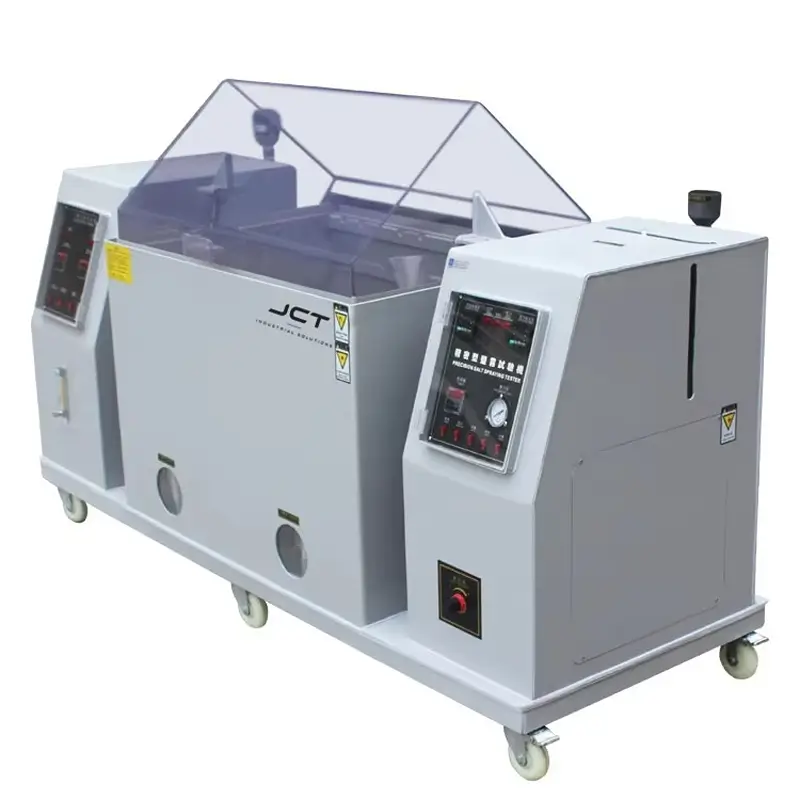
Strict compliance with IEC 61701 and ASTM B117 standards. Uses precision quartz atomizing nozzles and dual-layer heated salt solution tanks to prevent nozzle clogging during long-term salt fog exposure.
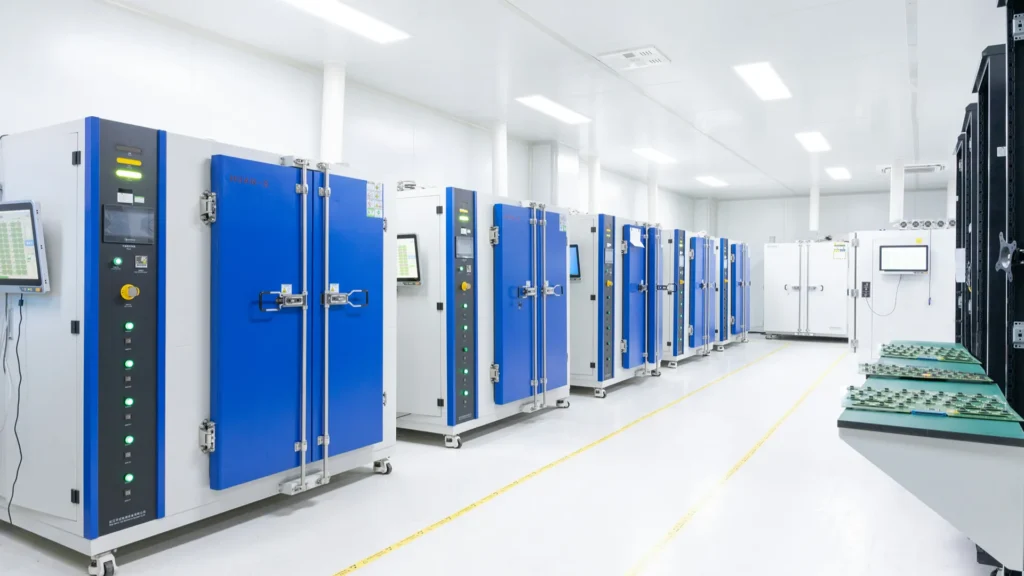
Direct Manufacturer of Environmental Test Chambers
WHO WE ARE?
We build environmental test chambers. We help you test raw materials and finished products under extreme conditions. We find potential quality risks before mass production, protecting your products from costly returns.
With over 10 years of industry experience, we cover a full range of equipment: +180℃ high temperature, -70℃ to +180℃ temperature & humidity, thermal shock, and salt spray corrosion chambers.
We have strong R&D and manufacturing power. We accept custom orders to match your exact test standards.
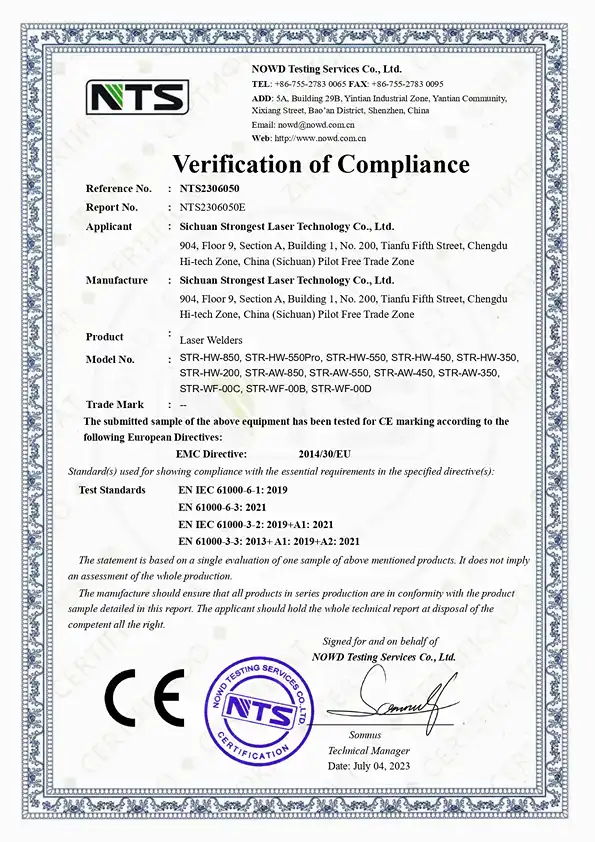
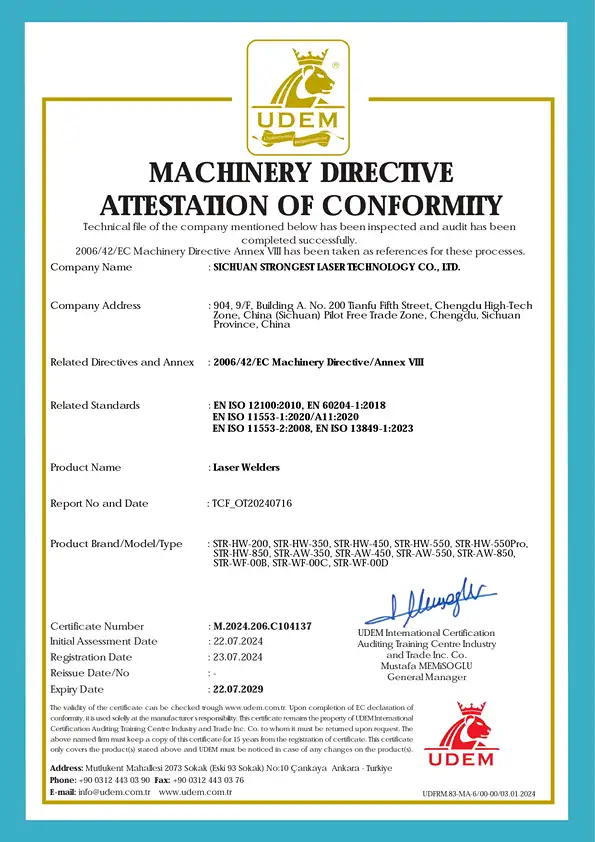
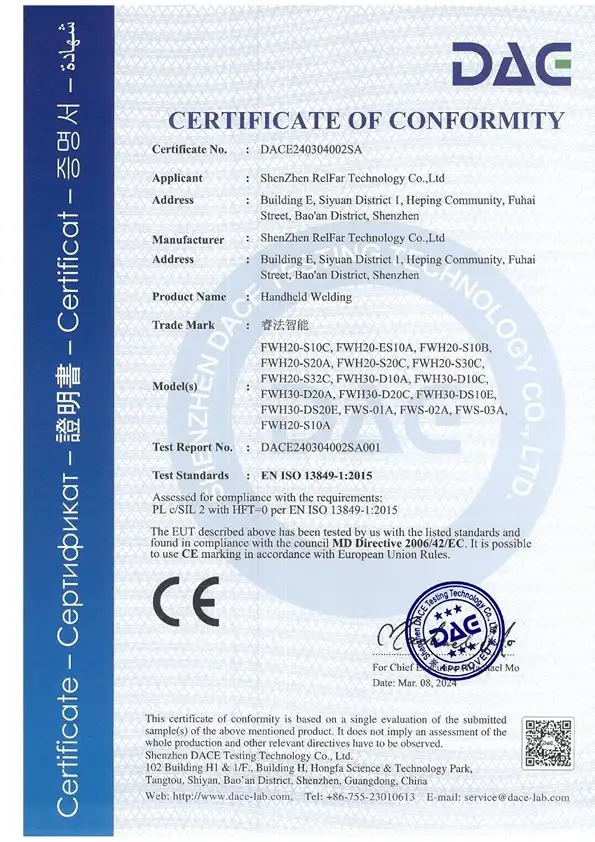
We hold over 30 patents. We are ISO9001 and CE certified. Our products are exported to 50+ countries, including Europe, North Europe, Australia, Latin America, and Southeast Asia.
We are the direct source factory—no middlemen. Choose JCT, and let us safeguard your product quality.
We hold multiple product patents. We are ISO9001 and CE certified.
Choose JCT. Choose a lifelong partner.
OUR CORE ADVANTAGES
Why Choose Us
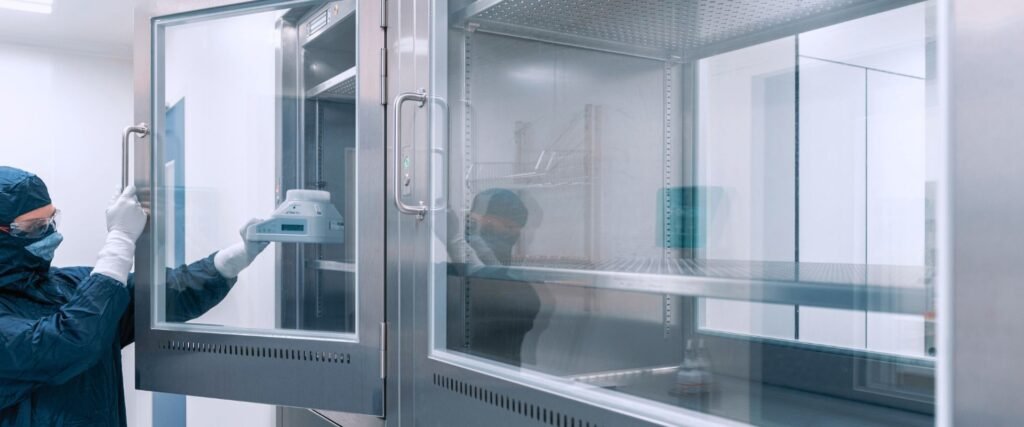
With over 10 years of rich industry experience, we are committed to served as a comprehensive technology manufacturer partner worldwide.We understand that your successful product relies on two core pillars: efficient manufacturing and uncompromising quality control.As a result, we offer a dual-core product line: first, laser and FAB solutions that ensure efficient manufacturing; and second, environmental test chambers for testing the performance of your products—all designed to address your specific industry issues and challenges.
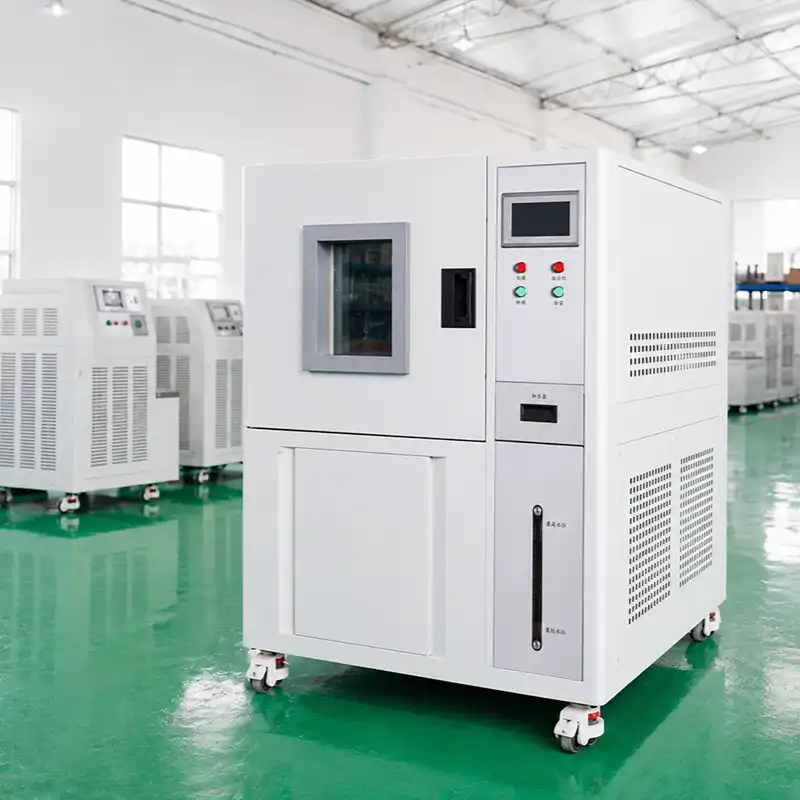
Industry-Specific Customization
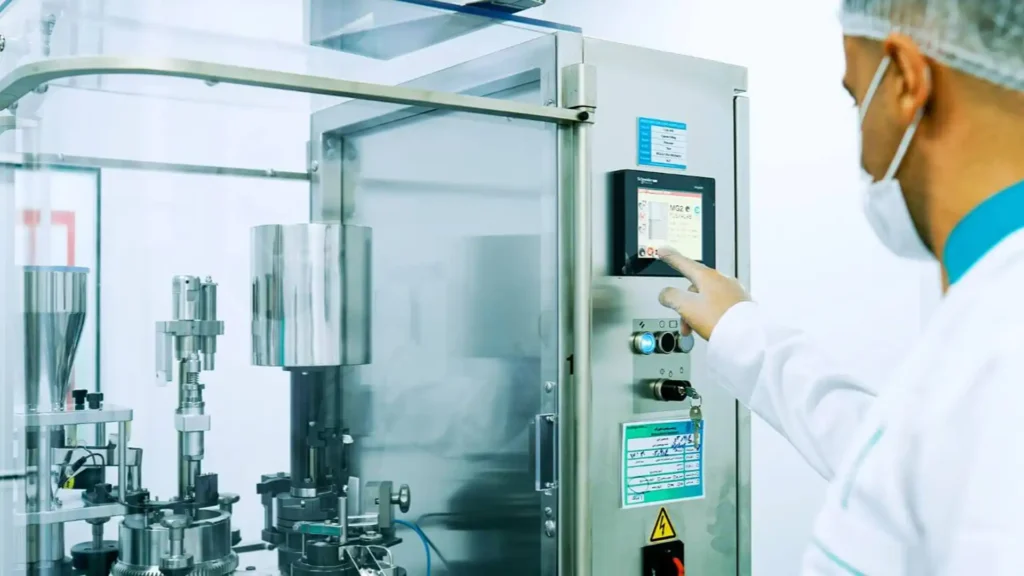
Whether you’re in the sheet metal or metalworking industries, or specialize in testing semiconductors and automotive electronics, our equipments all can be customized to meet your specific needs. We don’t just sell standard machines—we provide precise solutions that perfectly match your material and environmental requirements.
High-Efficiency Manufacturing
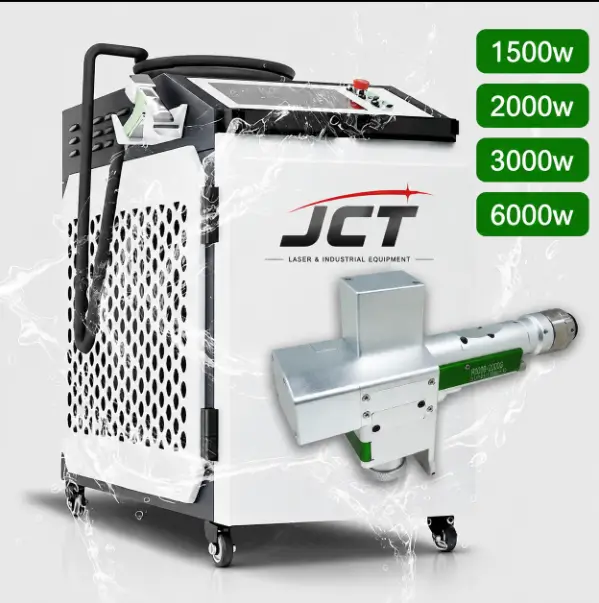
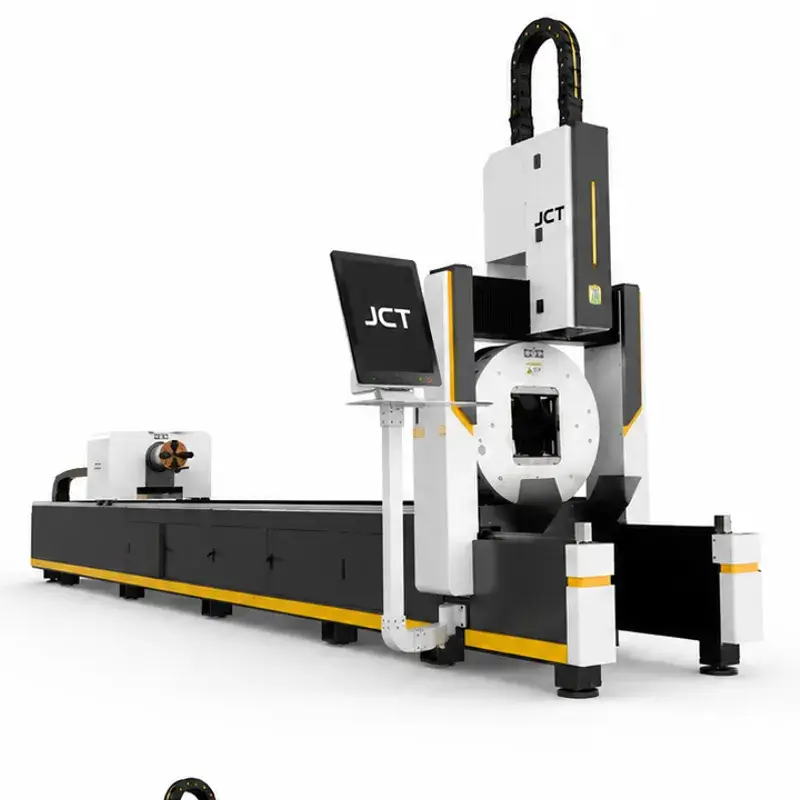
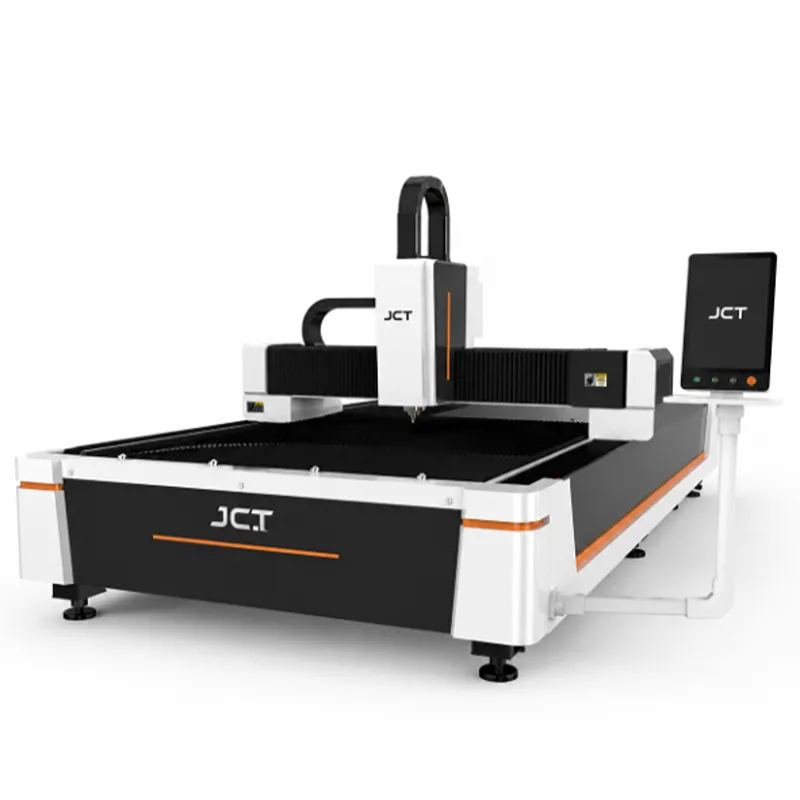
In the manufacturing process, time is your most valuable treasure. We offer fiber laser welding, cutting, and cleaning,etc solutions . All of them can provide deep penetration, distortion-free welding, precise cutting, and efficient cleaning for sheet metal and various types of metal processing.
Compliance and Quality Control
We ensure that your finished products can pass the most rigorous environmental testing. Our environmental test chambers help you meet strict global standards such as JEDEC, AEC-Q100, and key battery safety certifications, all these can shorten your R&D cycle and eliminating the risk of customer returns .
10+ Years & Global Support
With over a decade of technical expertise and a robust supply chain, we guarantee on-time delivery worldwide. More importantly, our engineering team will provide lifetime technical support, and we are committed to being your stable and reliable partner and friend for life.
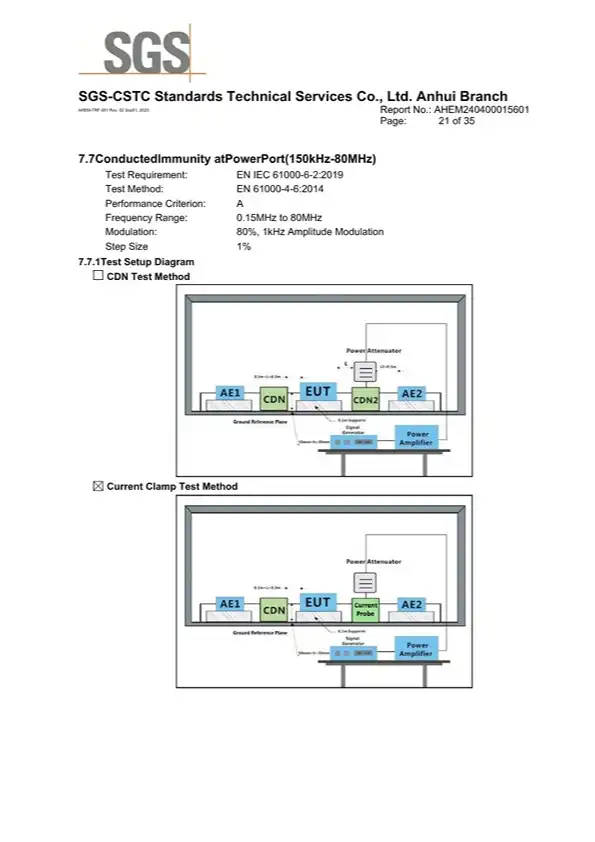
PREMIUM COMPONENTS ASSURANCE
Certified to Global Leading Standards
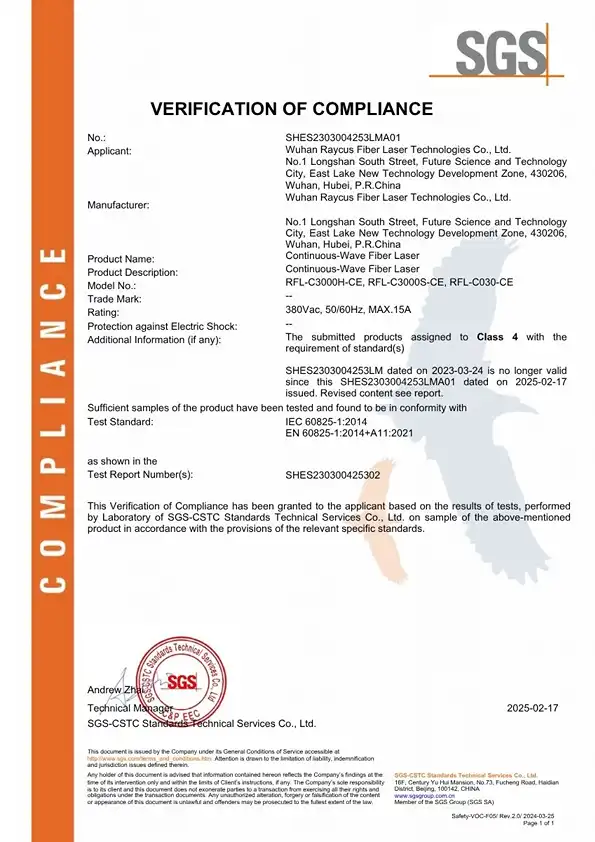
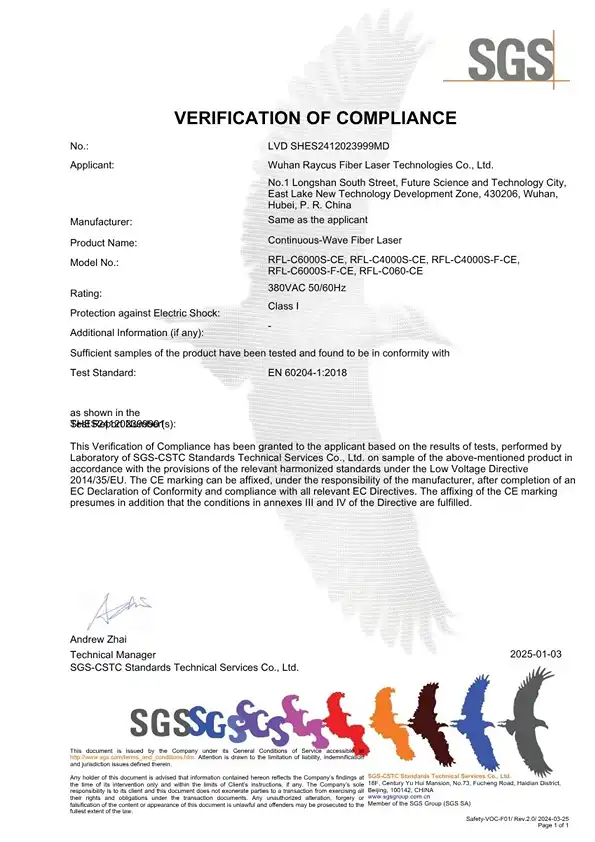
Reliability starts at the core. The key components that power our equipment—from the laser source to even the smallest electronic components—have all been certified to meet the world’s most stringent international standards.
GLOBAL PARTNERSHIPS
Trusted by Industry Leaders Worldwide
We take pride in powering the success of top-tier global manufacturers, research institutions, and industrial leaders. Our advanced laser and testing solutions are trusted worldwide to deliver uncompromising quality and peak performance.














FAQ
Q1: How does a test chamber replicate Potential Induced Degradation (PID)?
PID requires high temperature, high humidity, and a continuous high-voltage electrical bias. JCT chambers feature specialized high-voltage silicone access ports. You place the solar coupon inside the chamber at 60°C or 85°C and 85% RH, and connect an external DC power supply applying -1000V or -1500V between the cell circuit and the aluminum frame for 96 hours according to IEC TS 62804.
Q2: Can we perform the entire IEC 61215 Humidity-Freeze (HF10) cycle inside a single chamber?
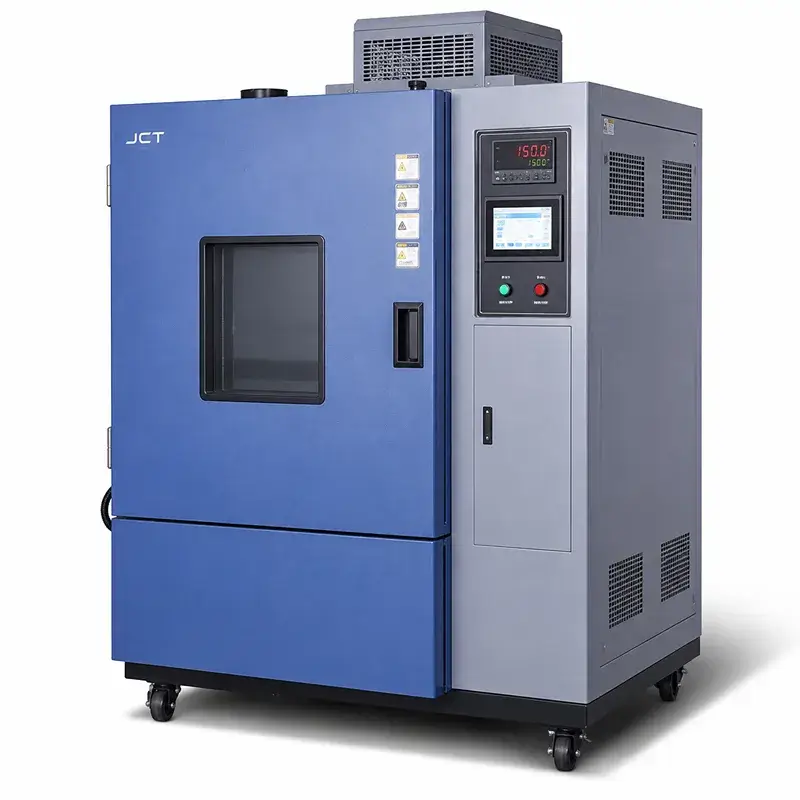
Yes. The JCT High-Low Temperature Alternating Damp Heat Chamber is engineered specifically for this sequence. It automatically holds 85°C and 85% RH to saturate the sample with moisture, drops the humidity, and ramps down to -40°C to freeze the absorbed moisture into ice. The system cycles through this process for the full 10 cycles completely automatically, logging the temperature profile continuously for your certification records.
Q3: How do we test junction boxes and bypass diodes under live electrical current?
Place The junction box inside the chamber at 75°C, and a high current equal to 1.25 times the short-circuit current ($Isc$) ,it is driven continuously through the diode. JCT chambers provide heavy-gauge, sealed cable access ports .They allow you to route high-current DC power cables directly to the sample while monitoring junction temperature via thermocouple data loggers.
Q4: Can we run power and sensor wires into the chamber without air or moisture leakage?
Yes. All JCT chambers feature standard 50mm, 100mm, or custom-dimensioned hermetic feedthrough ports ,they all equipped with high-density silicone plugs. This allows you to route voltage bias lines, thermal sensors, and optical fiber probes into the chamber while maintaining a perfect environmental seal, preventing condensation leaks or frost buildup around the portal edges.
Q5: How does the chamber prevent condensation droplets from falling directly onto our solar cells?
This is a vital engineering feature for electronic and solar testing. JCT chambers utilize an internal ceiling,it is sloped at an optimized angle and combined with strategically directed laminar airflow. Condensation runs down the walls into a drainage trough rather than dripping directly from the ceiling onto your test samples, eliminating false electrical short-circuits
Q6: What calibration and documentation are provided to satisfy ISO/IEC 17025 laboratory audits?
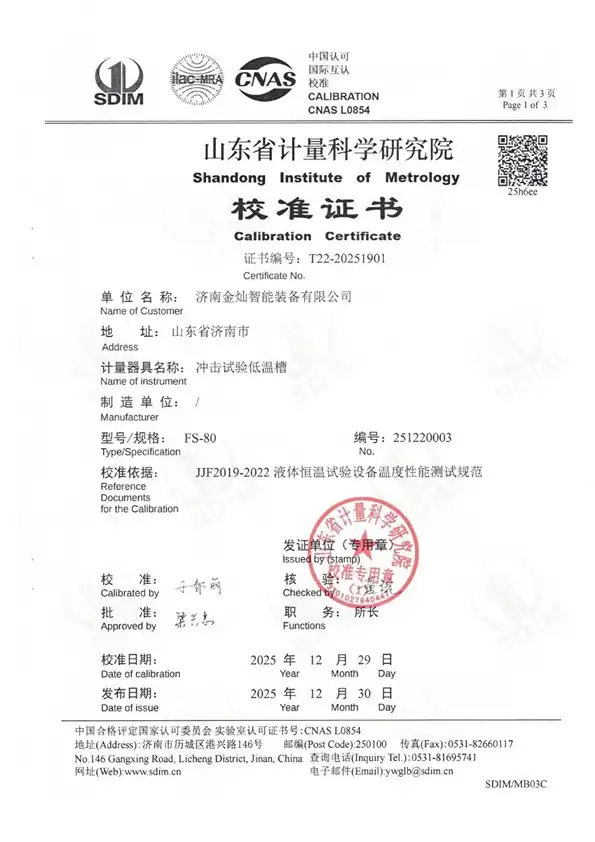
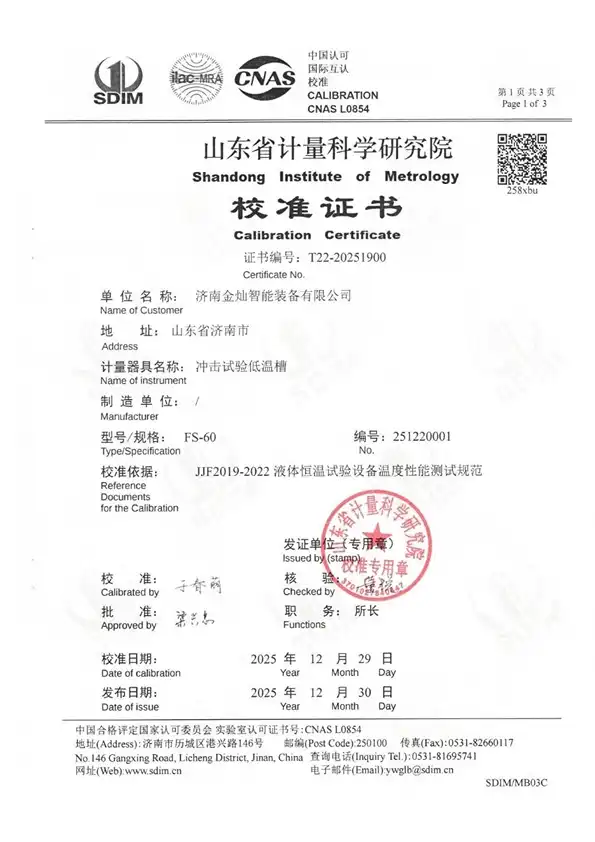
Every JCT chamber is factory-calibrated ,they use multi-point RTD temperature sensors and precision capacitive hygrometers traceable to international metrology standards (NIST/CNAS).
We supply complete calibration certificates, system schematics, validation manuals, and full software compliance documentations
Q7: What is the ROI of purchasing an in-house component test chamber versus outsourcing to third-party labs?
Commercial test labs charge anywhere from $5,000 to $15,000 for a single 1,000-hour Damp Heat or PID test sequence, with waiting times of several months. Investing in an in-house JCT chamber typically pays for itself within 2 to 3 test runs.
More importantly, it slashes your R&D iteration cycles from months to days, allowing your team to qualify new bill-of-materials (BOM) suppliers rapidly and catch fast-moving solar tenders.
Related Products
Get a Factory-Direct Custom Quote
Stop risking multi-million dollar performance guarantees and delayed bankability audits.
Tell our solar reliability engineers about your testing requirements (e.g., IEC 61215 Damp Heat, PID simulation, IEC 61730 diode testing), sample dimensions, and power feedthrough needs. We will specify the exact non-walk-in JCT test chamber configuration for your laboratory, complete with a factory-direct technical proposal within 12 hours.