5 Essential Steps to Choose the Right
Fiber, UV, or CO2 Laser Marking Machine for Your Shop
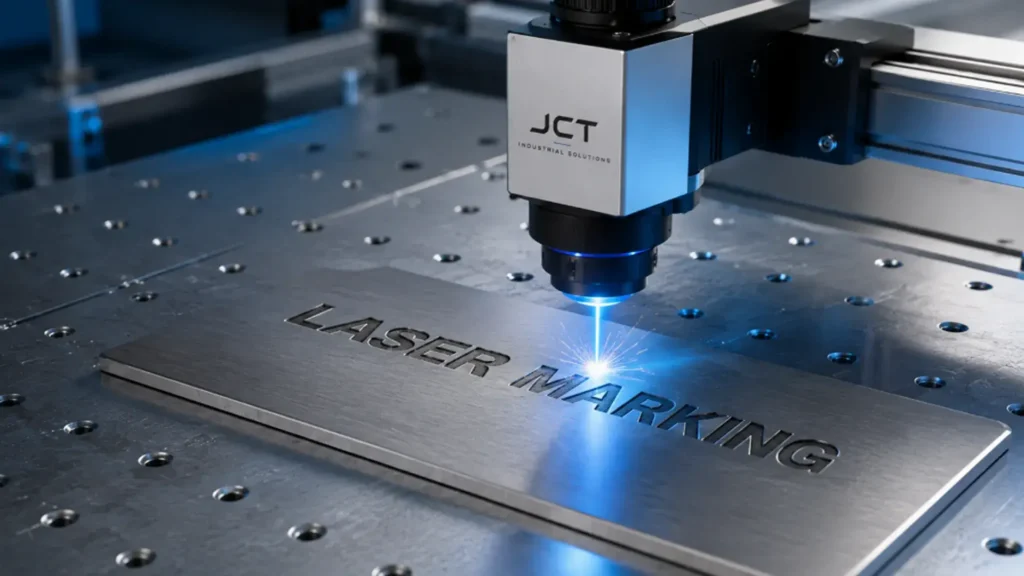
Equipping a custom fabrication workshop, electronic component plant, or contract manufacturing facility requires a rigorous approach to laser system selection. A widespread pitfall in equipment procurement is attempting to use a single “universal” marking solution for every material. In reality, processing bare metals, heat-sensitive plastics, or organic non-metals demands distinctly different laser physics and wavelength technologies. Whether you are evaluating compact benchtop models, split configurations, or heavy-duty floor-standing units, choosing the right machine depends on a step-by-step technical audit of your material portfolio, core optical components, and workstation ergonomics. If your engineering team is preparing to invest in a reliable marking system, here are the 5 essential steps you must follow to guarantee long-term operational efficiency and optimal return on investment.
Step 1: Match Your Material to the Correct Laser Source (Fiber, UV, or CO2)
Wavelength dictates interaction. Choosing the wrong laser source leads to material destruction, poor contrast, or complete energy reflection.
Fiber Laser Systems: Equipped with verified source generators such as Raycus or JPT (covering 20W and 30W tiers), fiber lasers deliver high-peak power optimized specifically for deep, high-speed marking on metal items.
UV Laser Systems (Ultraviolet): Operating with 5W Parker source units, UV lasers provide a “cold processing” mechanism. By utilizing short wavelengths, they eliminate thermal distortion, making them ideal for delicate plastics, glass, and sensitive electronic components without burning the edges.
CO2 Laser Systems: Utilizing 30W Dawei RF tubes, CO2 lasers target non-metal materials exclusively, rendering clean, high-contrast engravings on wood, leather, acrylic, and paper products.
Step 2: Audit the Core Trio: Galvo Scanners, Field Lenses, and Control Boards
A machine’s precision relies entirely on the synchronization of its motion and optical sub-systems. Inferior components cause coordinate drift and distorted barcodes.
Reliable industrial marking requires transparent, professional hardware specifications. Insist on systems driven by Golden Orange control boards with axis support, paired with Golden Hunan high-speed galvo scanners and precision lattice field lenses (150×150 mm format). This combination ensures stable vector-to-raster execution, eliminates thermal drift during high-speed multi-shift runs, and guarantees 100% readable 2D matrix barcodes.
Step 3: Evaluate Machine Form Factors and Workshop Ergonomics
Choosing an awkward form factor limits operational throughput and creates unnecessary physical strain for machine operators.
Match your physical workshop layout to the correct structural design.
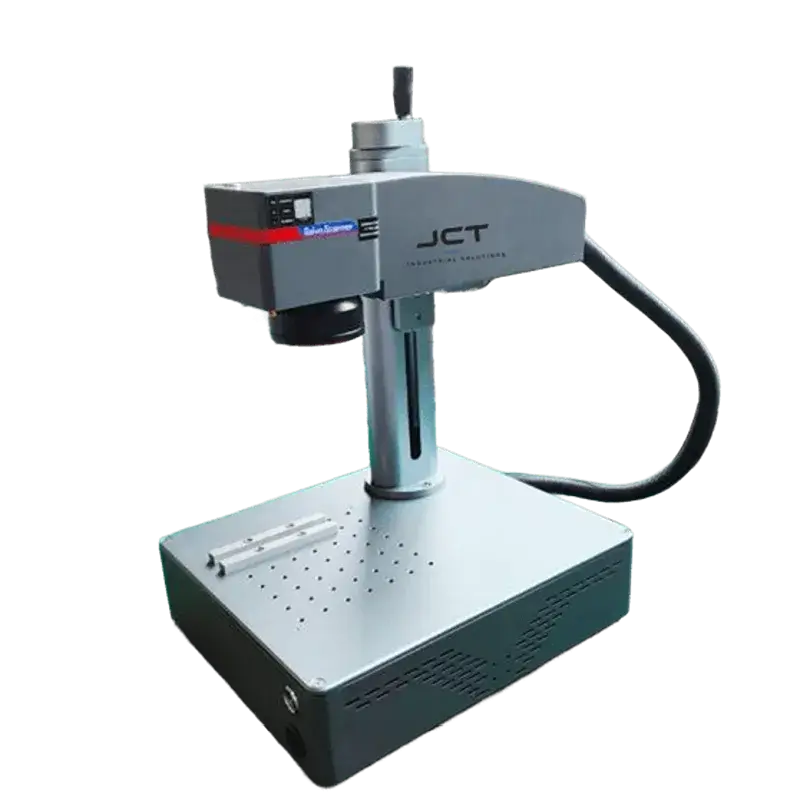
Foldable and Compact Desktops: Perfect for spaces-saving studios and light-duty benchtop marking.
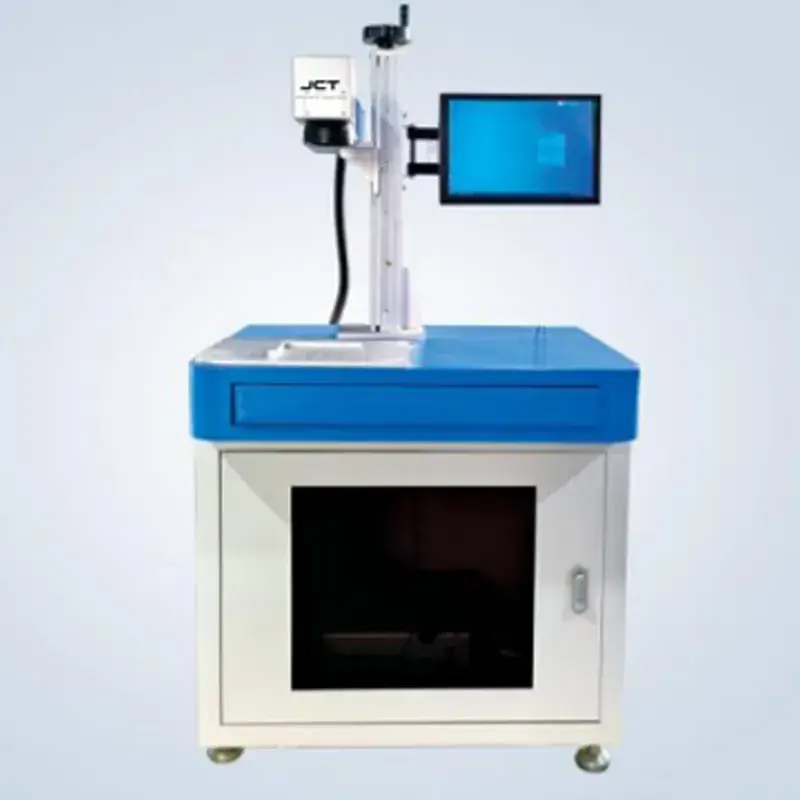
Split and Vertical Units (with or without integrated industrial PCs): Essential for heavy, oversized items or automated inline integration, providing the structural clearance and rigid axis control required for efficient daily loading.
Step 4: Verify Thermal Management and System Stability in UV and CO2 Units
Extended continuous operation generates internal heat that degrades laser tube output and ruins optical clarity.
While standard low-power fiber systems operate smoothly with basic air cooling, high-precision UV and CO2 laser systems demand rigorous thermal safeguards. Integrating professional Huanyuan industrial water chillers alongside dedicated air pumps and industrial-grade control computers ensures closed-loop temperature stability, prevents thermal lensing, and protects expensive optical elements from premature failure.
Step 5: Demand Component Transparency to Lower Total Cost of Ownership
Hidden component brands and inflated middleman markups trap buyers into expensive proprietary maintenance cycles.
True manufacturing transparency means knowing exactly what is inside your control cabinet. Sourcing equipment built with globally recognized sub-components—such as Raycus, Parker, Golden Orange, and Golden Hunan—ensures that replacement parts are accessible, maintenance is straightforward, and your long-term total cost of ownership (TCO) remains strictly optimized.
Conclusion
Choosing the right laser marking machine is a matter of matching engineering physics to your exact commercial workflow. By carefully evaluating laser source boundaries (Fiber, UV, CO2), auditing core galvo and lens specifications, selecting ergonomic form factors, and ensuring robust thermal management, technical managers can eliminate operational blind spots. If you still don’t know how to configure the optimal laser marking system for your specific material requirements and workshop layout, exploring direct-factory manufacturing solutions from specialized providers like JCT offers a clear path to transparent component selection, custom engineering support, and direct wholesale pricing.