7 Key Specifications to Check
Before Buying an Automated 6 Axis Robot Arm Welding Robot
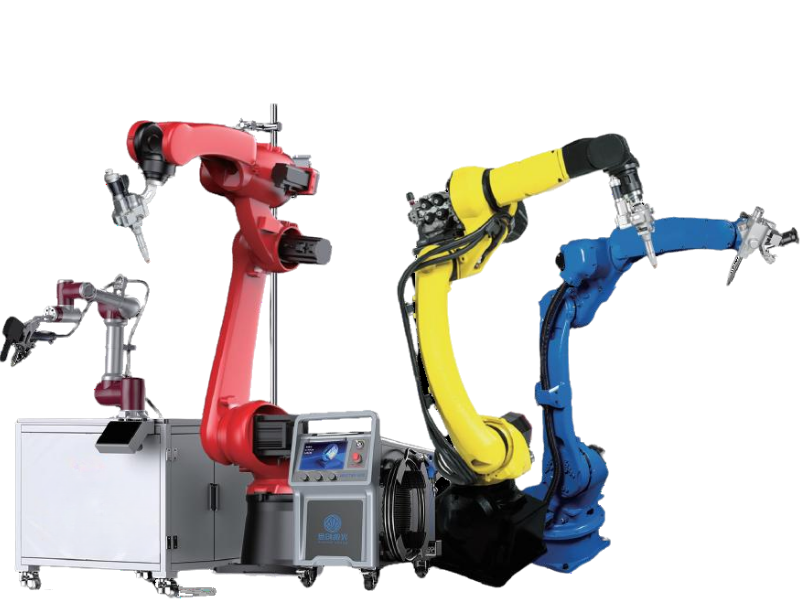
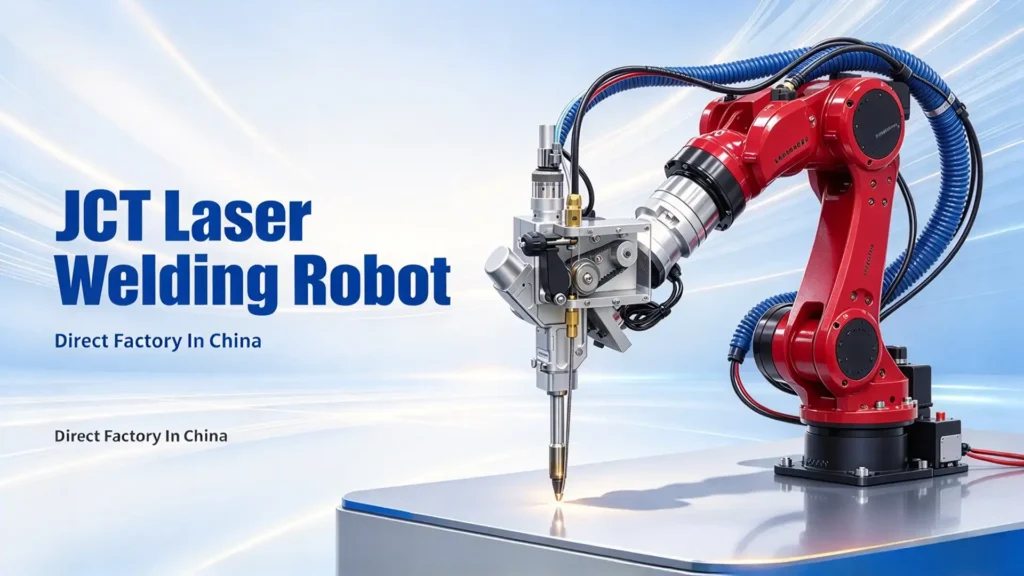
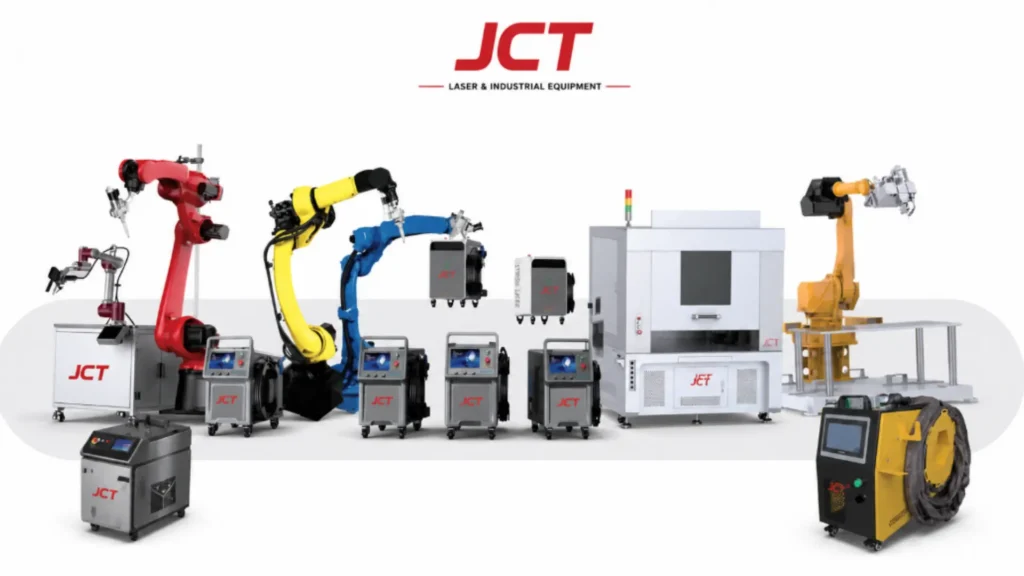
When upgrading a metal fabrication shop from manual welding to automated robotic cells, technical directors and procurement engineers frequently encounter a daunting array of technical specifications. Investing in a 6-axis robot arm welding robot represents a major capital expenditure, but many buyers fall into the trap of focusing only on the robot brand ,such as FANUC, Yaskawa, STEP, and CRP while ignoring critical optical, feeding, and safety parameters. Failing to evaluate key specifications—such as payload capacity, torch weight, anti-collision resilience, and multi-axis fiber flexibility—can lead to frequent line stoppages, wire-feeding jams, and costly production delays. This guide breaks down the 7 essential technical specifications your engineering team must verify before purchasing an automated 6-axis laser welding system.
1. Robot Payload Capacity & Torch Weight Optimization
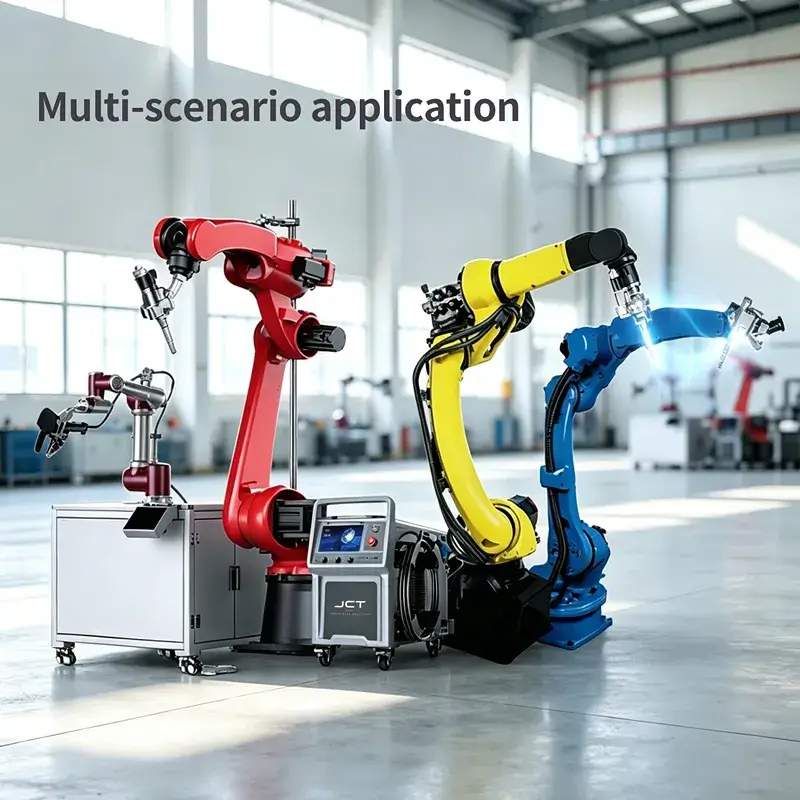
In automated welding, the payload capacity of the robotic arm and the weight of the torch head directly dictate movement speed and trajectory precision. Many buyers mistakenly assume that any robot with a nominal payload exceeding the torch weight is sufficient, ignoring inertial impacts during high-speed motion.
Superior automated welding systems feature thoroughly lightweight torch assemblies (including dual-pendulum lenses, drawing units, and adapter flanges) designed to keep total weight under 4.5KG, making them fully compatible with industrial and collaborative robots boasting payloads of 8KG or greater. Excessively heavy torches induce arm vibrations, degrade 3D path smoothness, and accelerate gearbox wear over extended high-speed shifts.
2. Anti-Collision Safety & Rapid Reset Mechanics
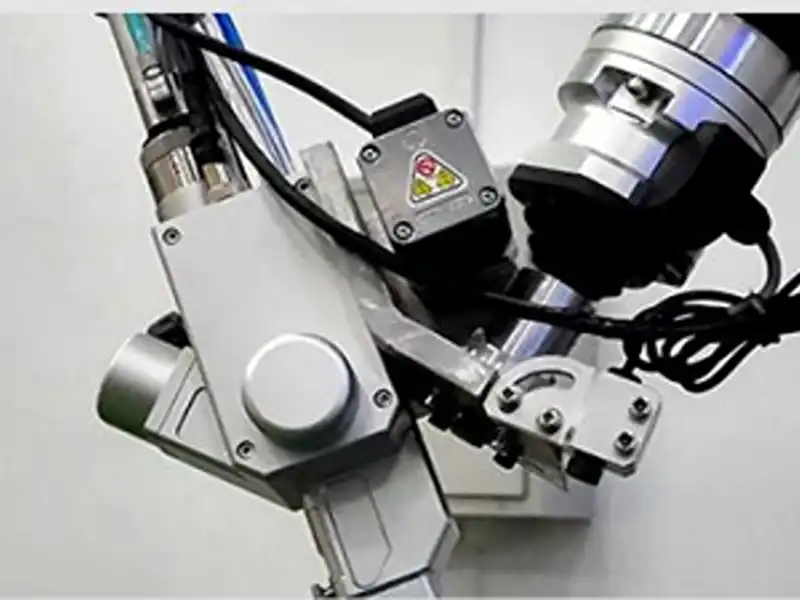
On busy shop floors, fixture misalignments, programming deviations, or thermal warpage present unavoidable collision risks. Without robust physical protection, high-precision optical lenses and torch structures face instant destruction upon impact.
Buyers must verify whether the system features an Anti-Collision Safety System. Premium configurations automatically trigger hardware-level emergency stops upon any angular collision, utilizing precision sensors to execute rapid, accurate physical resets without requiring tedious, time-consuming mechanical recalibrations, thereby maximizing uptime and protecting delicate optics.
3. Pull-Push Wire Feeding & Anti-Jamming Mechanics
On busy shop floors, fixture misalignments, programming deviations, or thermal warpage present unavoidable collision risks. Without robust physical protection, high-precision optical lenses and torch structures face instant destruction upon impact.
Buyers must verify whether the system features an Anti-Collision Safety System. Premium configurations automatically trigger hardware-level emergency stops upon any angular collision, utilizing precision sensors to execute rapid, accurate physical resets without requiring tedious, time-consuming mechanical recalibrations, thereby maximizing uptime and protecting delicate optics.
4. 360-Degree Fiber Rotation & 140° Flange Engineering
The primary advantage of a 6-axis robot lies in complex spatial 3D trajectory welding. However, as the robotic arm executes large-angle continuous rotations, internal fiber-optic cables transmitting high-power laser energy are highly vulnerable to twisting, stress accumulation, and fiber breakage.
The mechanical interface of the fiber connection warrants rigorous inspection. Systems engineered with a 140° adapter flange and 360° continuous non-binding rotation allow the optical fiber to relieve torsional stress smoothly during multi-axis robotic motion, preventing power attenuation and optical damage.
5. Red-Line Crosshair Focal Alignment Efficiency
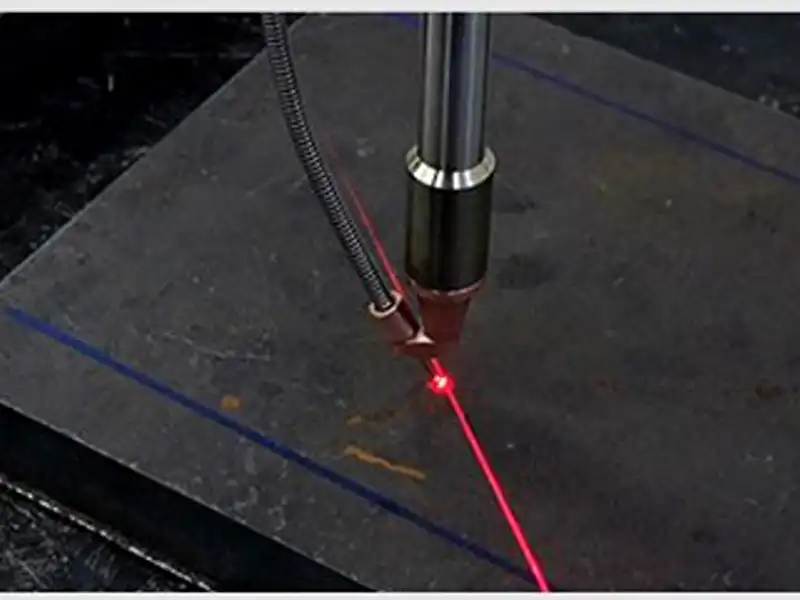
Switching between workpiece thicknesses on an automated line requires absolute focal precision. If every parameter change demands tedious trial-and-error burn tests, valuable shop-floor throughput is sacrificed.
Advanced automated welding cells integrate red-line crosshair alignment tools that overlap precisely with the laser focal point. Operators can verify focal distance visually in seconds without empirical guesswork, slashing setup times and reducing skill barriers.
6. System Compatibility & Built-in Expert Process Libraries
Automated welding is not a random collection of hardware, but a deeply synchronized integration of control cabinets, laser sources, robotic arms, and wire feeders. Buyers must ensure seamless interoperability with existing shop-floor robotic brands (such as FANUC, Yaskawa, STEP, or CRP).
Verify that the control cabinet features rich external I/O interfaces and standardized industrial communication protocols. Furthermore, the system should store at least 16 sets of pre-programmed expert process libraries, allowing operators to recall and fine-tune multi-parameter settings (power, frequency, wobble speed) via an intuitive touch interface.
7. Industrial Protection & Environmental Adaptability
Manufacturing environments constantly contend with metallic dust, oil mists, high ambient temperatures, and voltage fluctuations. Many entry-level automated systems lack adequate environmental shielding, leading to circuit board short-circuits or thermal alarms after only a few months of operation.
Assess the overall industrial protection rating (such as IP54 or higher) alongside dust-sealed optical and pneumatic pathways. Rugged thermal resilience ensures that the system maintains stable, 24/7 high-duty performance even in harsh industrial atmospheres.
Conclusion
Purchasing an automated 6-axis robot arm welding robot requires meticulous evaluation of specifications that go far beyond the robotic arm brand name. From lightweight torch engineering and anti-collision resilience to push-pull wire feeding and multi-axis optical protection, every single technical detail dictates the long-term ROI of your automated investment. For manufacturing plants seeking robust, high-performance automated systems without the inflated margins of traditional tier-one integrators, partnering with an experienced direct-source manufacturer makes all the difference.
Explore our advanced automated robotic laser welding systems and configuration options today to secure custom engineering support and direct-factory pricing for your fabrication facility.