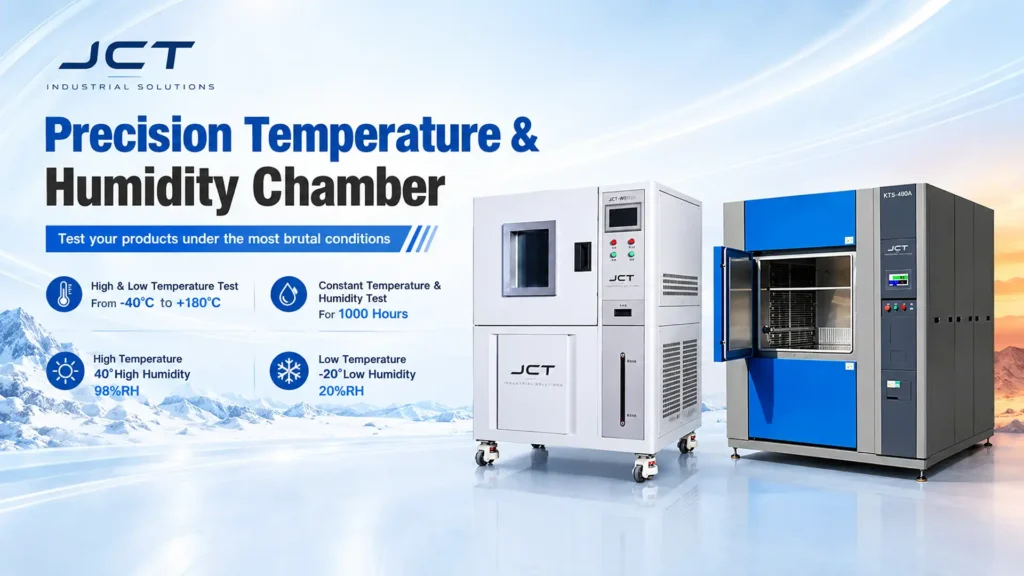
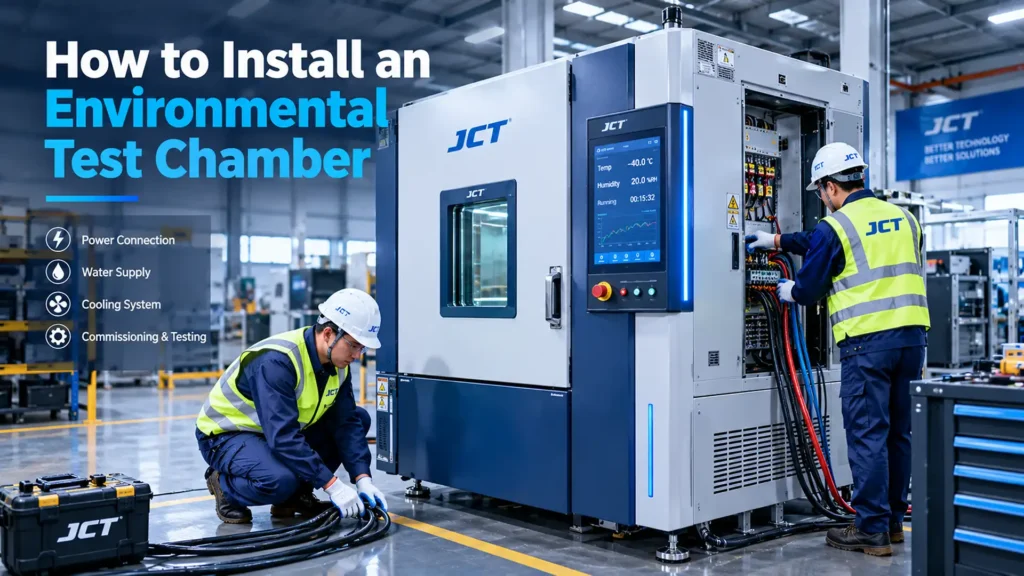
How to Properly Install and Commission Industrial Environmental Test Chamber?
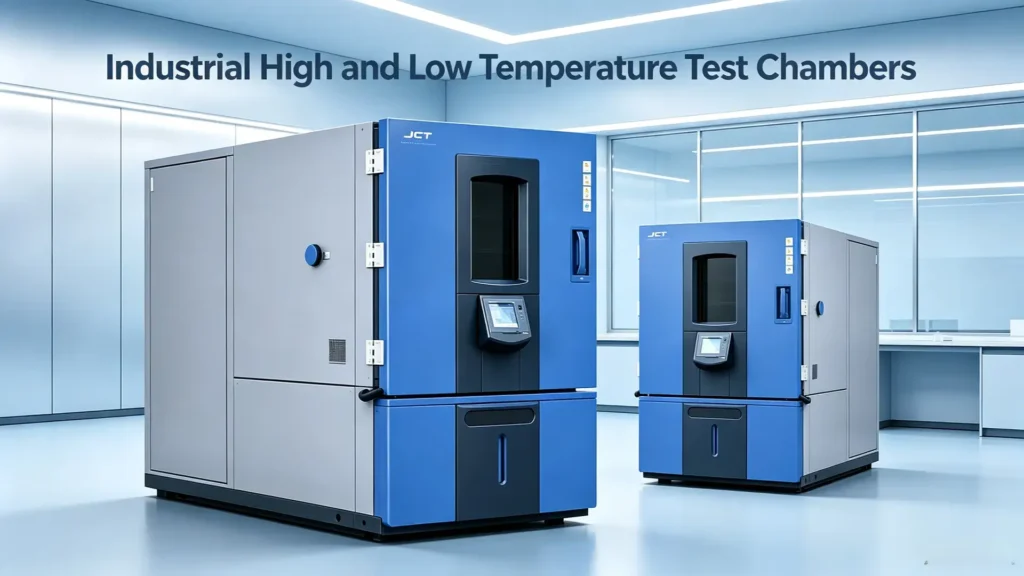
Procuring an industrial environmental test chamber is only half the battle; ensuring it is properly installed and commissioned on your facility floor determines whether the machine will achieve its rated thermal performance or suffer from chronic operational failures. A common pitfall in project management is treating a complex climate chamber like a standard plug-and-play appliance, neglecting critical site preparation parameters such as floor load-bearing capacity, electrical harmonic stability, auxiliary water purity, and dedicated exhaust ducting. If your engineering team is preparing to receive a new test system and wants to eliminate startup delays, here is the comprehensive, step-by-step guide on how to properly install and commission an industrial environmental test chamber.
1. Site Preparation and Structural Load-Bearing Evaluation
Heavy testing systems—especially multi-stage cascade refrigeration chambers and large walk-in units—exert immense concentrated static and dynamic loads on workshop flooring.
Verify that your concrete slab meets thickness and reinforcement requirements. Ensure adequate clearance around the chamber perimeter (typically 60 to 100 centimeters) to guarantee unrestricted airflow to air-cooled condenser coils, facilitate routine maintenance access, and prevent heat buildup between adjacent machinery.
2. Electrical Infrastructure and Power Harmonic Stability
Climate chambers draw substantial amperage during rapid cooling cycles and heavy heater engagement. Inadequate wire gauges or unstable facility power lead to frequent breaker trips and controller brownouts.
Coordinate with certified electricians to install dedicated circuit breakers and appropriately rated copper cabling matching the manufacturer’s voltage and amperage specifications. Verify proper system grounding to protect sensitive microprocessors and ensure electrical safety against transient power surges.
3. Water Utility Integration and Steam Generator Protection
For chambers equipped with active humidity generation, the quality of supply water dictates whether your internal steam generators and water lines survive for years or clog with mineral scale in months.
Connect dedicated supply lines utilizing purified, reverse osmosis (RO), or deionized (DI) water as specified by the engineering manual. Maintain appropriate water inlet pressure and install reliable floor drainage traps with air gaps to prevent backflow and prevent overflow hazards during automated reservoir purging.
4. Exhaust Fluid Dynamics and Hazardous Gas Venting
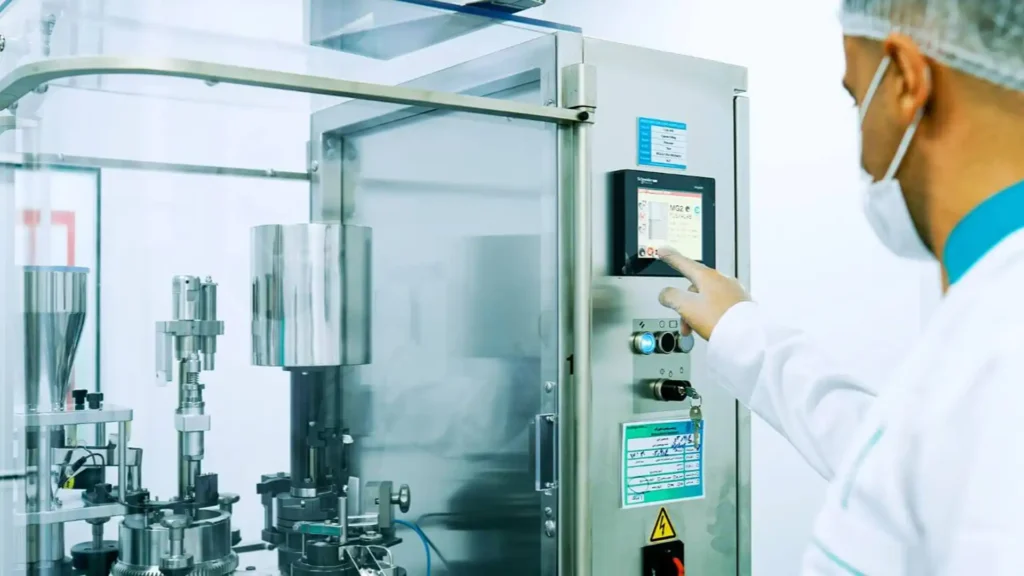
Testing samples—such as plastics, composites, or electronic boards under extreme heat—frequently release volatile organic compounds (VOCs), smoke, or thermal degradation gases.
Route dedicated rigid or flexible exhaust ducting from the chamber’s pressure-relief and smoke-vent ports directly to the facility’s exterior or an approved chemical scrubber system. Ensure proper static pressure matching so the exhaust fan assists chamber pressure balance without pulling conditioned air out of the workspace
5. Commissioning, Sensor Calibration
Initial power-up is not commissioning. Blindly trusting factory default settings without verifying local environmental interactions causes immediate compliance test failures.
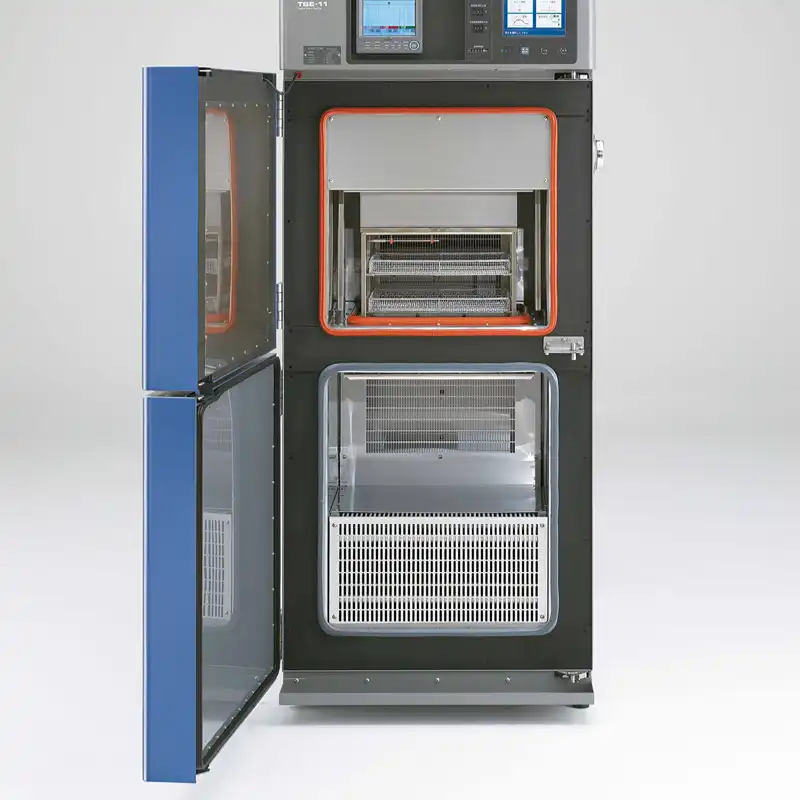
Execute a rigorous dry-run commissioning protocol. Perform a comprehensive multi-point thermal and humidity mapping test,using calibrated external reference sensors. Document baseline ramp rates, verify safety interlocks (over-temperature protection), and calibrate control loops before releasing the chamber for official production testing.
Conclusion
Properly installing and commissioning an industrial environmental test chamber safeguards your capital investment and ensures repeatable, audit-ready testing data from day one. By meticulously planning site footprints, electrical power stability, water purity, exhaust dynamics, and spatial sensor mapping, technical managers eliminate costly startup failures. If you still don’t know how to prepare your facility’s utility infrastructure, manage complex rigging, or execute certified on-site commissioning for your new testing equipment, exploring direct-factory engineering and turnkey support solutions from specialized industrial providers like JCT offers a transparent pathway to professional installation, rigorous calibration, and complete operational readiness.